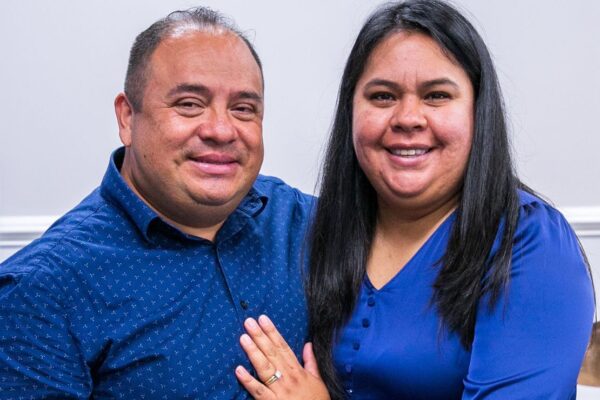
Pastor Manuel Espinoza and his wife, Pastor Laura Espinoza, love their church members like family. Immigrating to the U.S. from Mexico when they were teenagers, they moved to Virginia in 2014 to start a Pentecostal church.
They hope to create a safe and welcoming space for immigrants from Latin America to worship and find community. Today, they know all of their church members and their families — some for almost 10 years.
But since the start of President Trump’s second term, their church has lost six members to Immigration and Customs Enforcement (ICE)’s heartless deportation machine. Every time a person is disappeared by ICE, Pastor Laura and Pastor Manuel not only cry and pray with the family, but also do everything they can to support them.
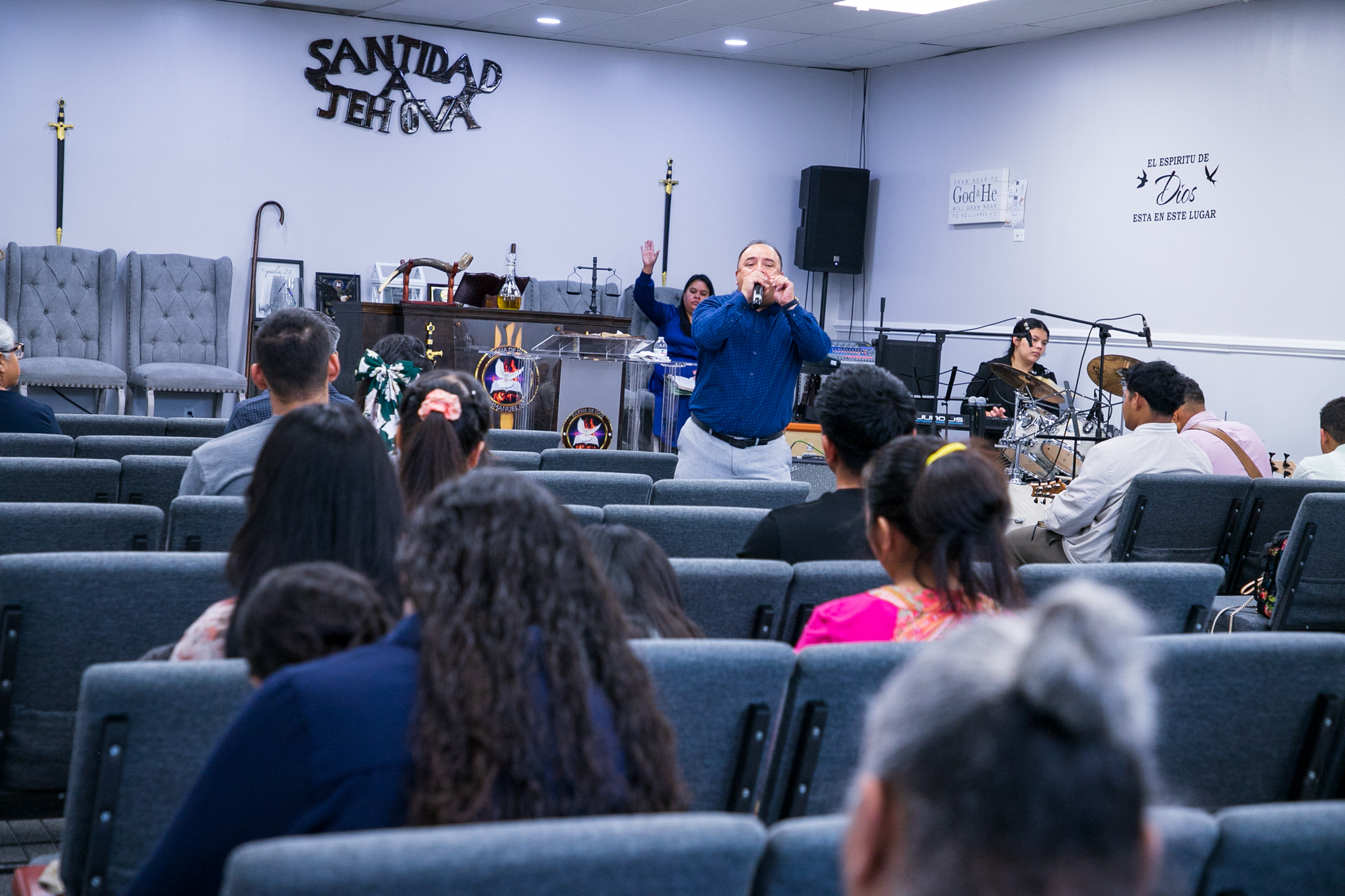
Every Sunday, Pastor Manuel and his wife, Pastor Laura, remind their members, a community of Latinos who have been living in fear of ICE, that they are safe in church, and that God is watching over them and protecting them.
Photo: Phuong Tran
Pastor Laura and Pastor Manuel have driven for hours from Newport News to Farmville to visit church members who are detained there, and they’ve spent their limited resources to find immigration lawyers who can help them. Without hesitation, they have also jumped in to take care of their members’ loved ones who are left behind — serving as drivers, interpreters, resource coordinators, and guardians.
Pastor Laura: “We are more than pastors — we are family. In here, we love each other. We respect each other. And we have each other’s back. We may have come from different countries, but we’ve found people that we love like family. We have our own blood family, and we have our spiritual family here.”
—We may have come from different countries, but we’ve found people that we love like family.
Pastor Laura
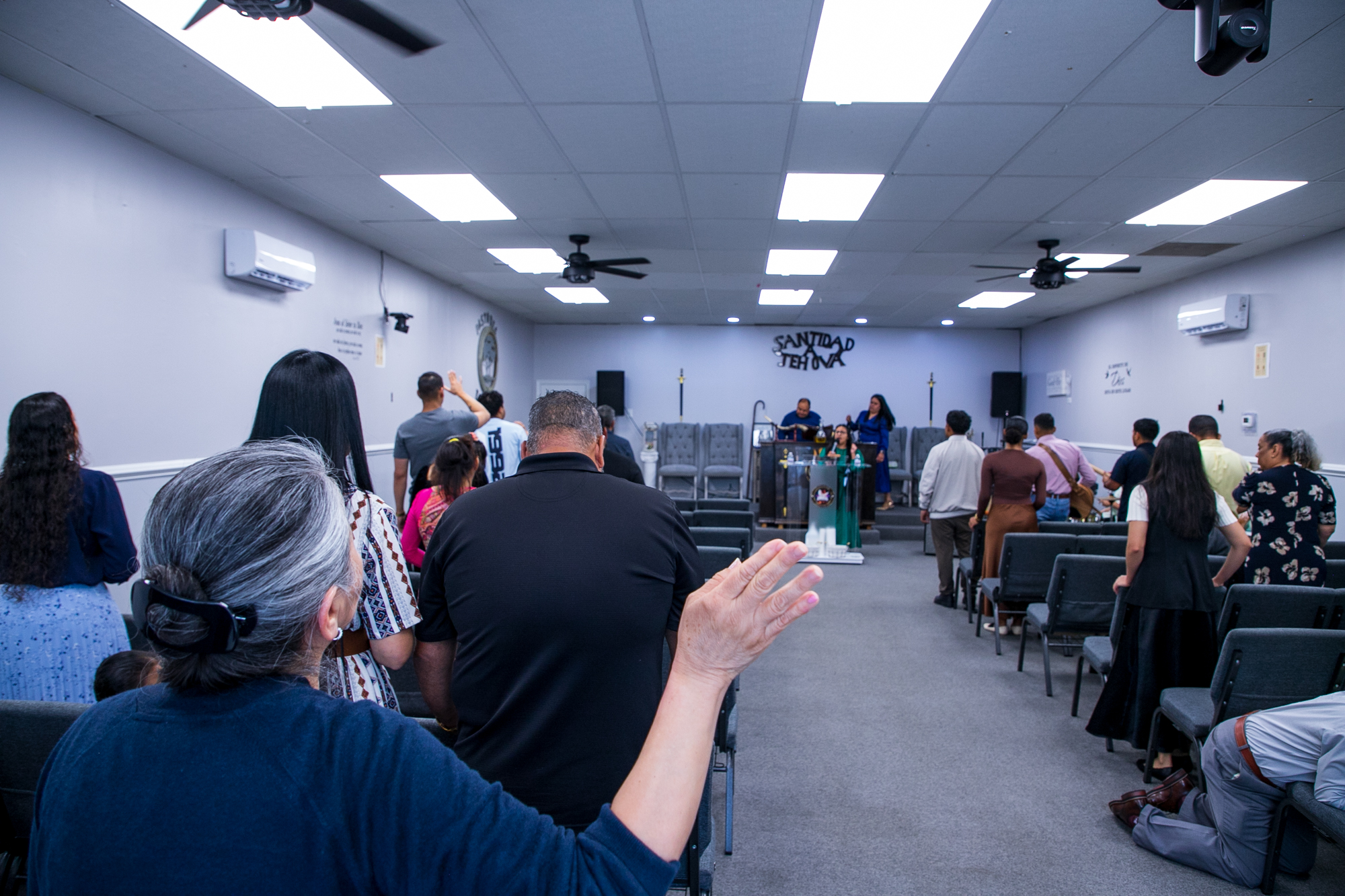
Members of Pastor Manuel's church come from El Salvador, Guatemala, Nicaragua, Honduras, Puerto Rico, Dominican Republic, and many other countries in Central and South America.
Photo: Phuong Tran
Both Pastor Laura and Pastor Manuel grew up in Mexico. At 16, Manuel walked through the desert for a day and a half to cross the border alone to America.
Laura, on the other hand, came here at 12 with her parents, leaving her country behind to go to school in a new country in a new language. They met in Los Angeles, fell in love, and say that the rest is history.
Pastor Laura: “Just like any immigrant kids, I didn’t know any English and had to start learning how to speak and how to read and write [when I was] in middle school. Now, I’ve been in America for 26 years. We’ve been married for 21 years. And we’ve been pastors for 12 years.”
Pastor Manuel: “In the beginning, it was hard. We came here with no papers — but now, we are U.S. citizens. Now I have my wife, my children, and my family. It has been a blessing to have our life in America.”
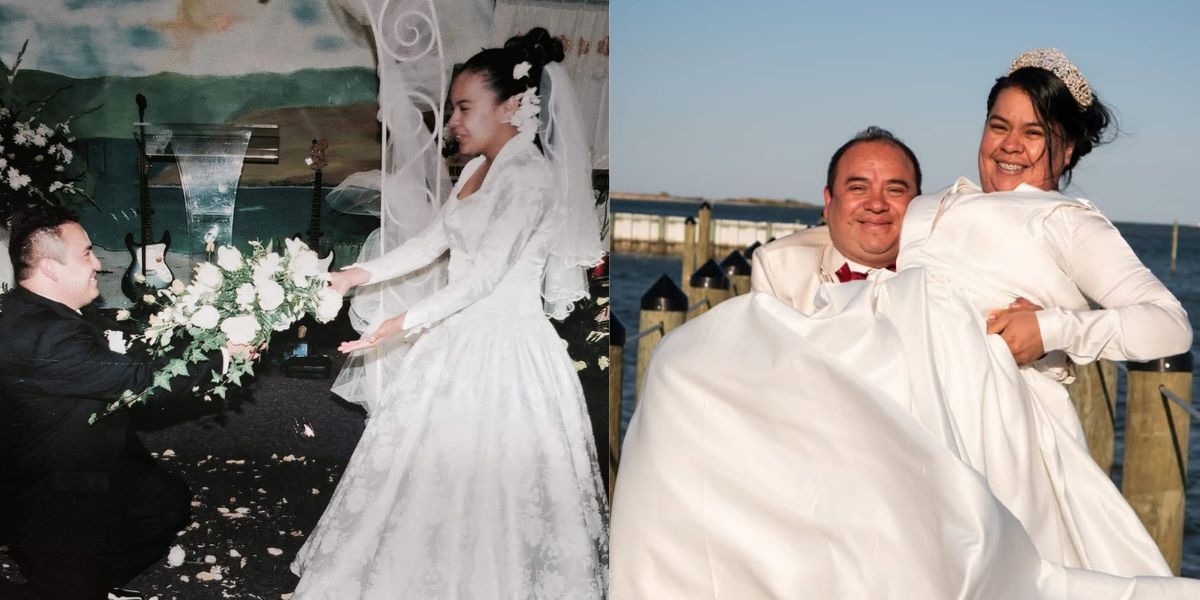
Pastor Manuel and his wife, Pastor Laura, got married in 2005 in Los Angeles. Twenty-one years strong into their marriage, they've built a big family of four kids whom they love dearly and are immensely proud of.
Photos courtesy of Pastor Laura and Pastor Manuel
Pastor Manuel has been in America for 33 years — more than twice the age he was when he left his home in Mexico looking for a future. For all that he has been though, he is most proud of his kids and supporting people in his community, like the two young brothers from El Salvador he and Pastor Laura serve as guardians for after they were illegally detained by ICE.
After ACLU-VA attorneys sued the Trump administration to release the brothers - and won, Pastor Laura and Pastor Manuel went to Farmville Immigration Detention Center to bring the boys home.
Pastor Manuel: “I was the boys’ age when I came to America on my own. When they were in ICE detention, we were the only ones who could help them. There were others who wanted to help them, but they couldn’t. We always tried to let [the boys] know that they are not by themselves, that there are people out here fighting for them to be free.”
Pastor Laura: “We don’t see them as strangers — we see them as our sons, our daughters, our family. For the boys, if something happened to one of them, we feel it. We feel it because we love them. We try to protect them – not only spiritually, but also physically. We tried our best so they can be safe and have everything they need.”
—We always tried to let [the boys] know that they are not by themselves, that there are people out here fighting for them to be free.
Pastor Manuel
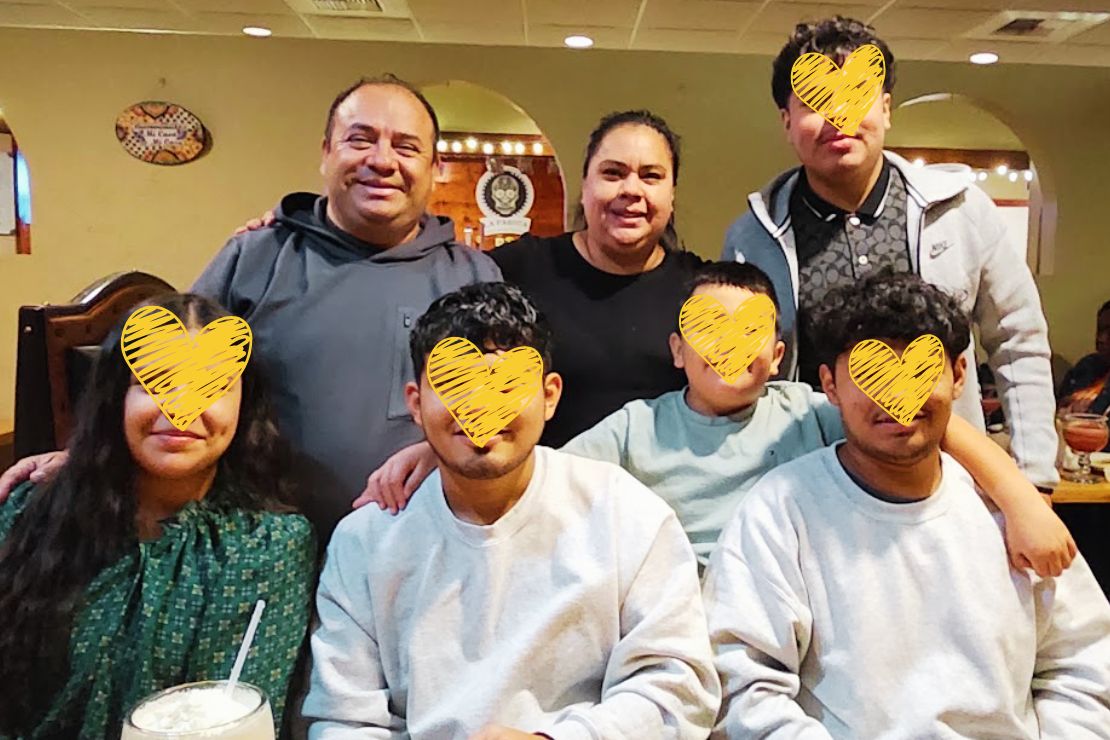
Pastor Laura and Pastor Manuel bring their whole family to pick up the brothers after they were released from Farmville Immigration Detention Center.
Photo: Phuong Tran
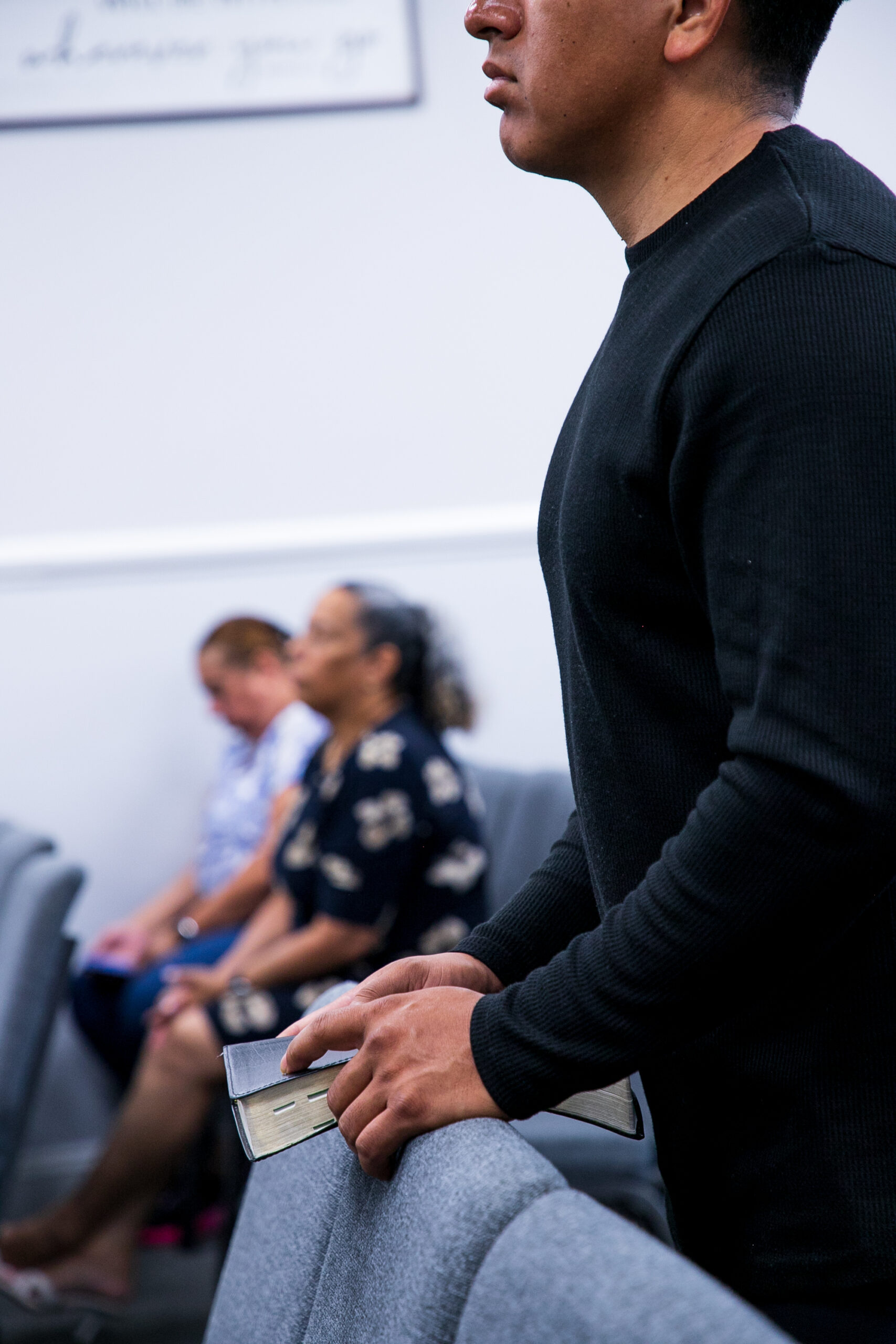
One of Pastor Manuel's congregants hold onto his Bible as he prays in church.
Photo: Phuong Tran
Under the Trump administration, leading a church of immigrants takes grit — and tears. Pastor Laura and Pastor Manuel have witnessed families being separated, kids going without their parents, and lives being forever changed. Even when they don’t have all the answers for a grieving family, they try their best to take care of each other.
Pastor Laura: “How do you explain to a child that your dad is not going to come back? Or how do you explain to a kid that they had to go back to a country that they don’t know? They only know the United States – they only know their teachers and their schools here. Any time we go to the detention center, the kids would ask us: ‘Are you going to bring my dad back?’ and we had to tell them: ‘We don’t know if your dad will come back.’ That hurts the most.”
Pastor Manuel: “We had one sister. Her husband was deported a year ago. She stayed here for a year, but last week, she left for El Salvador. Her daughter — she is only 16 — she stays here with us. We know she would have a better future here. We protect her and help her in any way we can. At our church, we don’t care about the offerings, or the money. We care about our members being safe. We worry about families being together. Sometimes we can’t do anything — but if there’s something we can do, we’ll do it.”
—We care about our members being safe. We worry about families being together.
Pastor Manuel
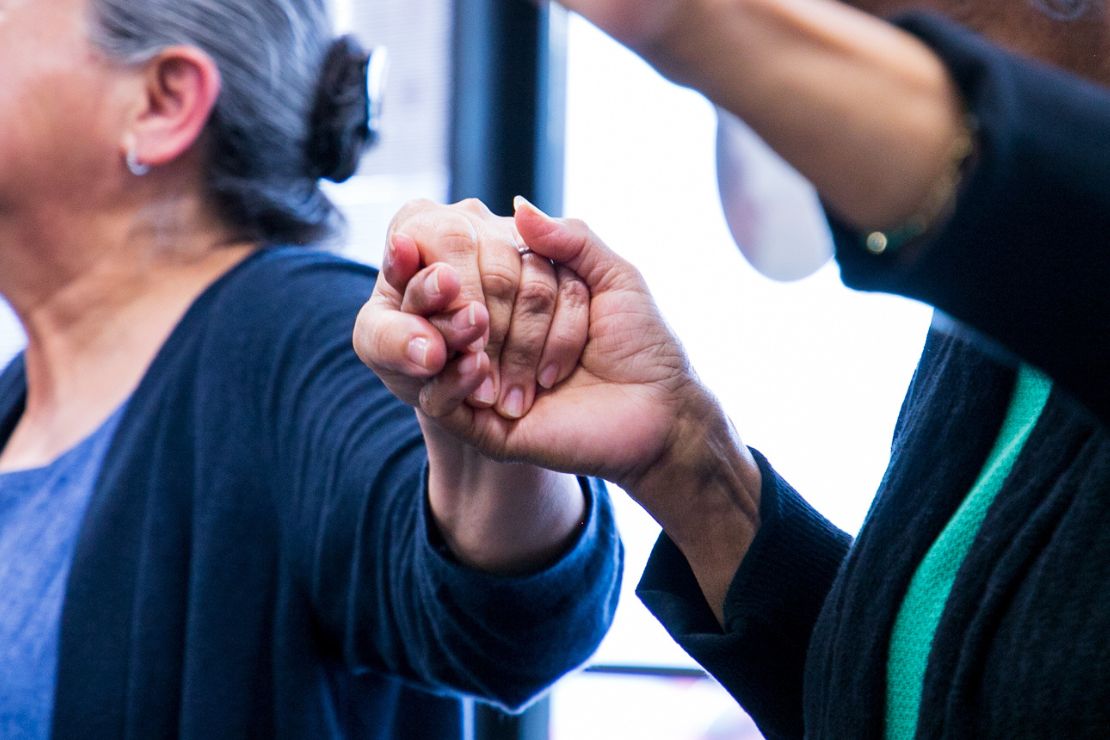
Two churchgoers hold each other's hands as they pray for peace and safety for their community.
Photo: Phuong Tran
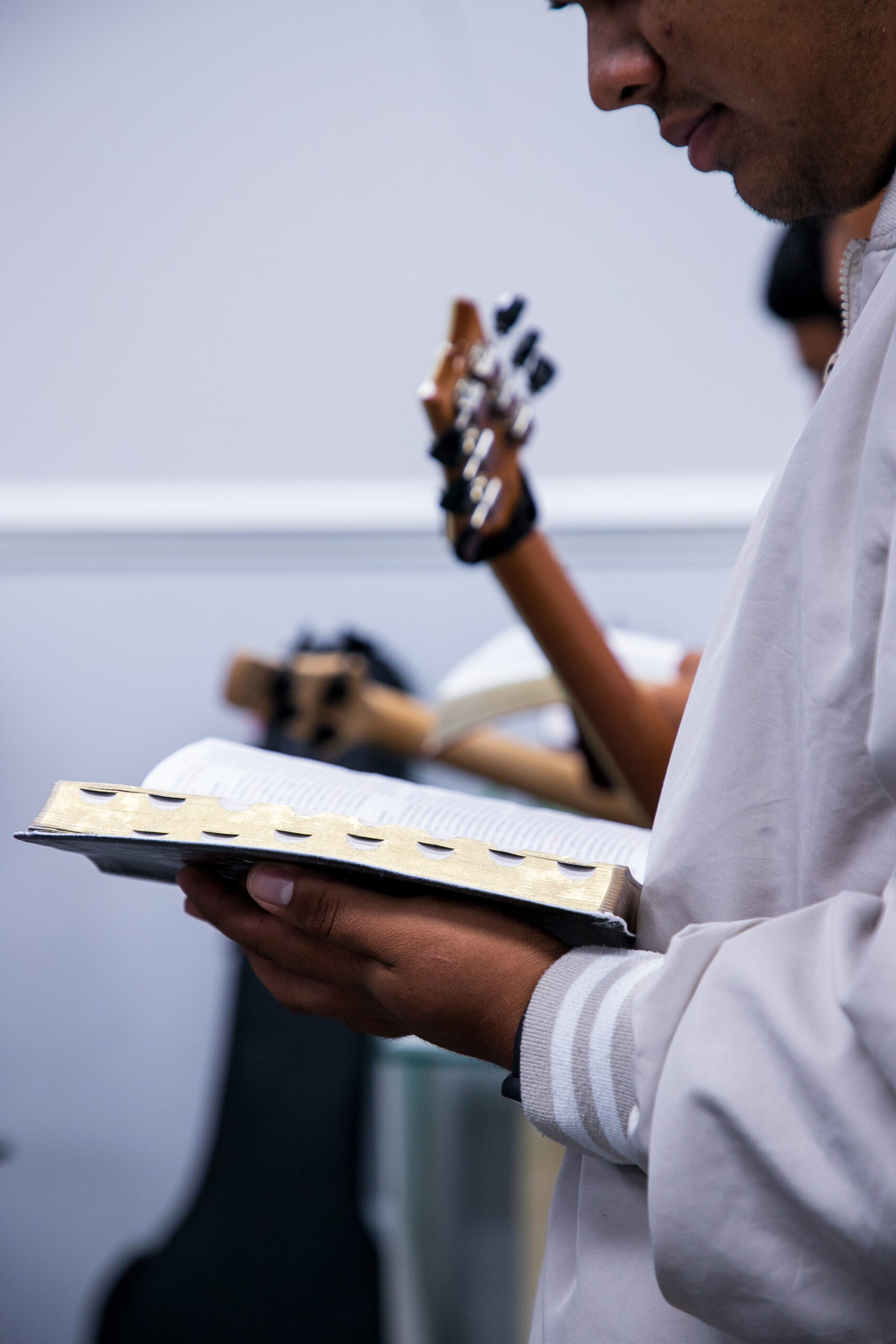
The brothers are back in church, playing in the band and worshipping with their community.
Photo: Phuong Tran
Pastor Laura and Pastor Manuel describe losing the people they love like family to the Trump deportation machine as being extremely hard. But they also see moments of joy. When the brothers came home from ICE detention and showed up in church with their bandmates, the whole congregation rejoiced. Their reunion with their spiritual family brought hope to people who have been living in a climate of fear and uncertainty.
Pastor Manuel: “It is hard whenever we talk to someone who is locked up. We don’t know when they will be deported. It is hard when we are free and the boys are locked up — for no reason. So, when they called to say they were going to be free, it was joy[ful] for the family and the whole congregation. Even though only two people came out, those two people being out made the whole congregation happy.”
—Even though only two people came out, those two people being out made the whole congregation happy.
Pastor Manuel
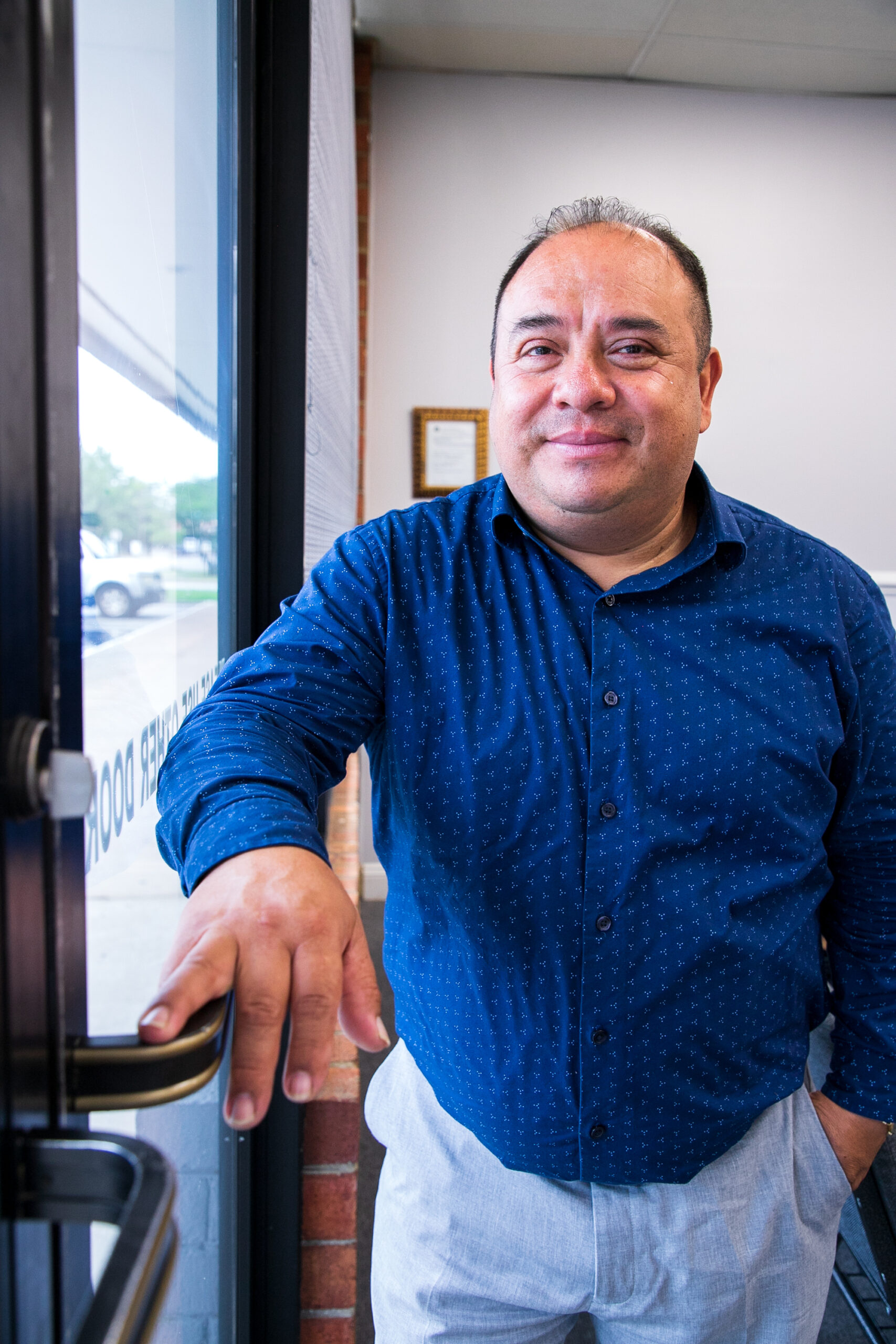
Pastor Manuel shares his story to shed light on what's happening to immigrants in Virginia. He speaks out for others who do not feel safe enough to do so.
Photo: Phuong Tran
Pastor Manuel hopes that President Trump would think about families like him and his church members, who came to the United States to work and take care of their families. They are construction workers, restaurant workers, cleaners, caregivers, and faith leaders, people who help their neighbors and make Virginia stronger.
—So, when you say ‘We The People,’ we are the people, too.
Pastor Manuel
Pastor Manuel: “If it’s not for the people, there can be no country. If it’s not for the people, there can be no economy. If it’s not for the people, there can be no life. The government needs to think about who the real people are — who the real workers are. They came here to support their families and to have better lives.
“So, when you say ‘We The People,’ we are the people. too.”
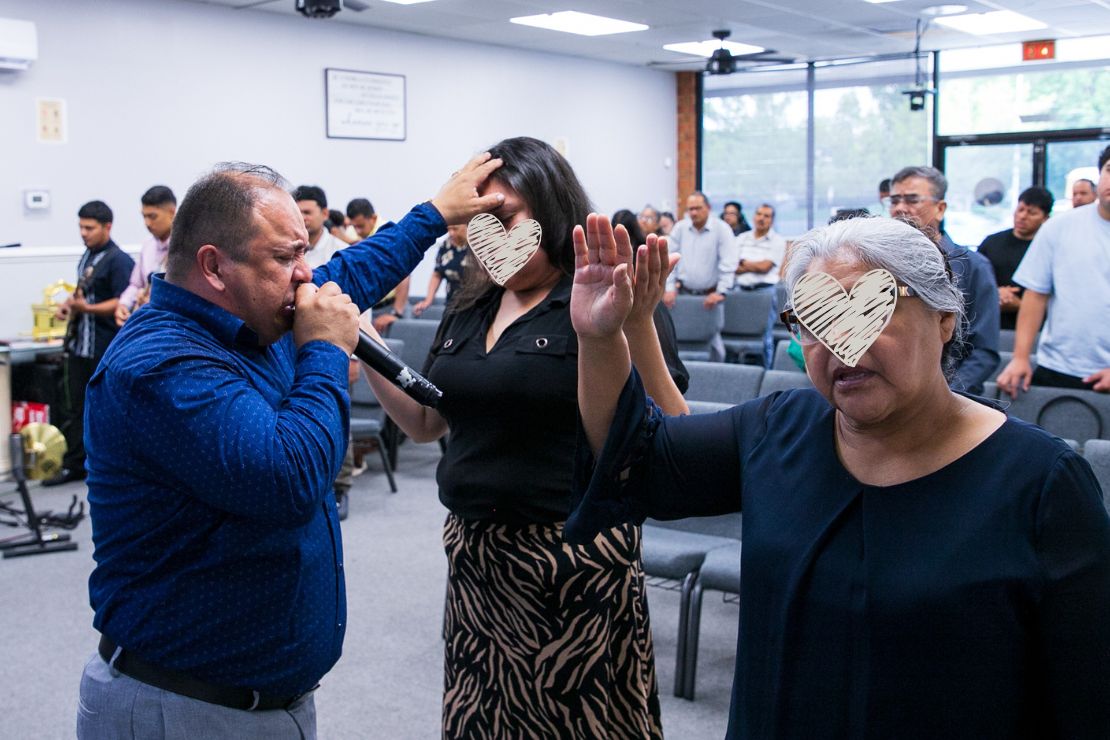
Pastor Manuel prays for two women in his church as the rest of the congregation prays for them.
Photo: Phuong Tran