
In 2026, we fought to put power in the hands of the people, so that together, we can protect our freedoms in Virginia – no matter who’s in office.
We worked hard this year to enshrine our rights directly in Virginia’s constitution and block the Trump administration’s hateful agenda. We’re committed to putting people over politics, so that in Virginia, there are no exceptions to equal rights.
Check out how YOU helped us defend Virginians, defeat threats to our freedoms, and debunk harmful misinformation this year.
Defending Virginians
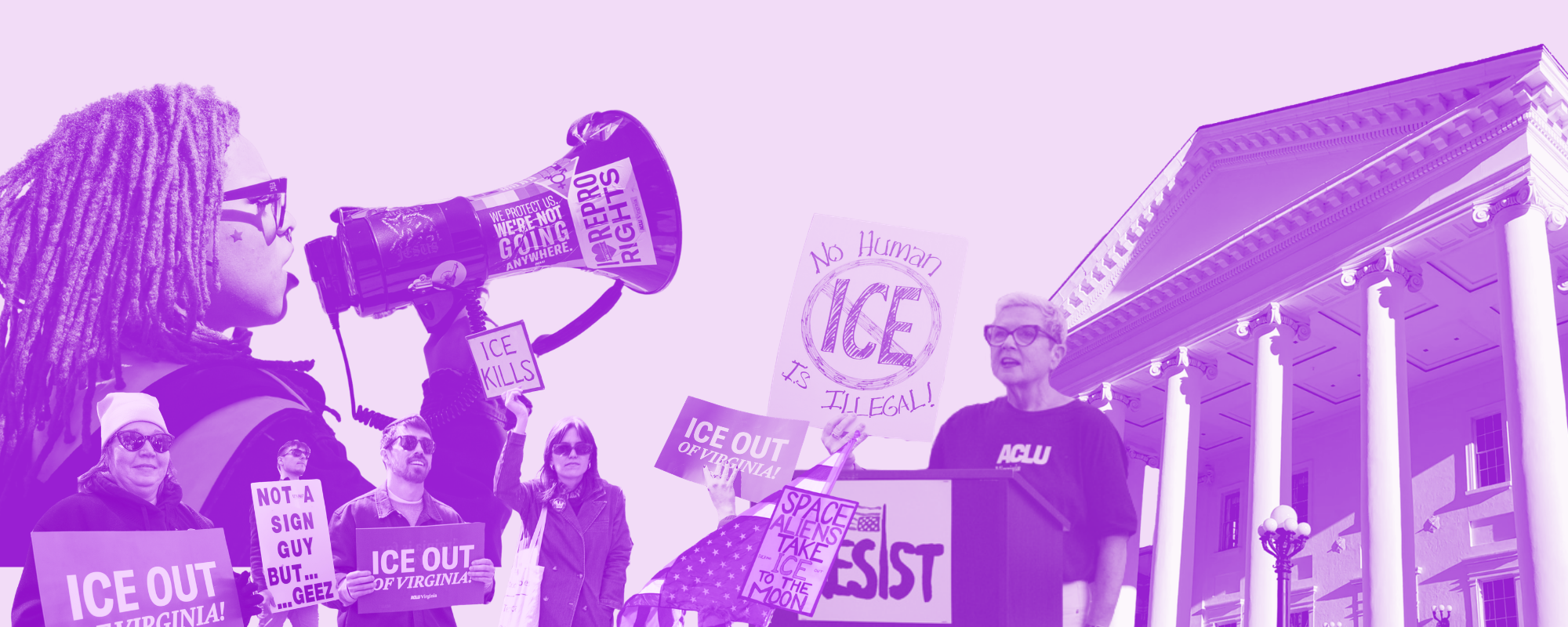
The Trump administration’s violent, anti-immigrant agenda has had Virginia in its crosshairs ever since the president was inaugurated in 2025.
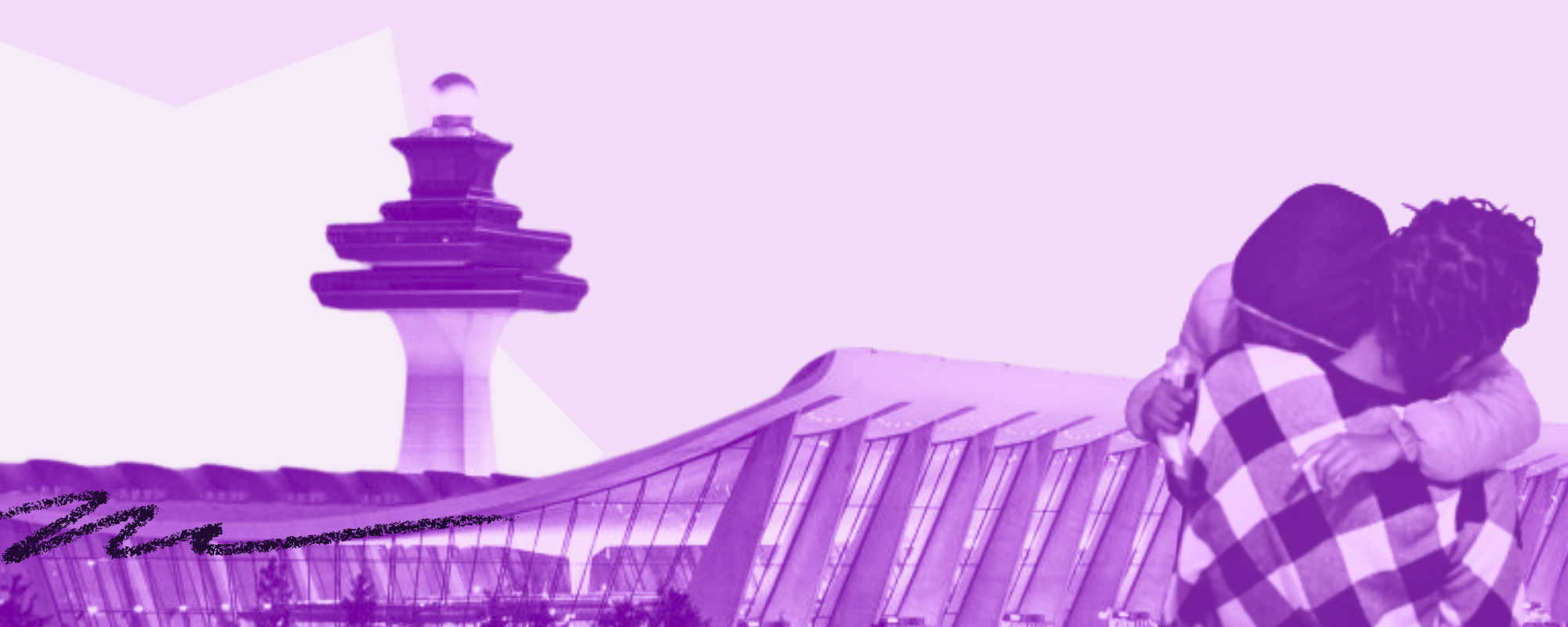
But no one is above the law. Our staff have held federal agents accountable for their attacks on immigrants like Annabelle Gyasi, a pregnant mother whom Customs and Border Protection (CBP) held in a windowless room at Dulles Airport for more than a week this summer.
It took an emergency petition to get Ms. Gyasi out of that room, where she and her four-year-old son were denied adequate food and hygiene, and where she experienced complications that endangered her pregnancy.
Ms. Gyasi had the necessary visa to be in the United States to get medical care for her toddler. She followed all the rules – but by illegally detaining her at Dulles, CBP did not.
Neither did the Office of Refugee Resettlement (ORR), another branch of the Trump administration, when the agency illegally detained our young clients, “Jane” and “Mark.”
Jane and Mark are siblings who have no family in the United States. ORR assumes custody of unaccompanied minors until it can release them to a sponsor. But even though Jane and Mark had a sponsor within days of their arrival to the United States, ORR illegally detained the young siblings in a Virginia youth facility for almost a year. That’s against the law and ORR’s own policy.
Our lawyers finally got Jane, Mark, Ms. Gyasi, and her four-year-old son out of illegal detention. But Ms. Gyasi is not the only parent our lawyers defended from the Trump administration this year.
“Alex” was illegally detained away from his toddler for almost a year after he accompanied a friend to court. Our lawyers got him out of ICE detention, but Alex now suffers from symptoms that indicate he’s at risk for long-term organ damage due to the diabetes that he told ICE he has, but which ICE failed to treat.
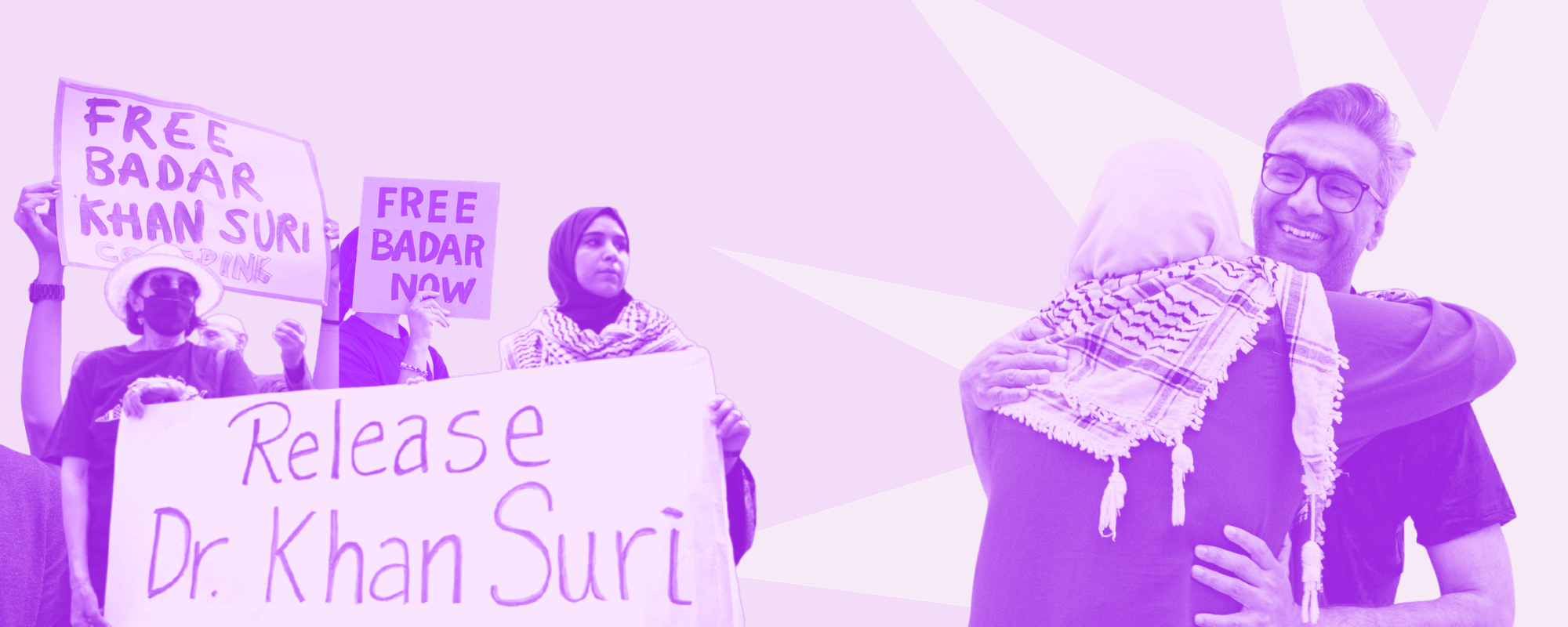
This year, we also defended Dr. Badar Khan Suri, a Georgetown professor who was shuffled between five different detention centers after masked, unidentified agents stopped him outside his Rosslyn apartment where his three young children were asleep.
The Trump administration targeted Dr. Suri for his constitutionally protected speech on Palestinian rights and for his association with his wife, a U.S. citizen of Palestinian origin. Our lawsuit forced ICE to release Dr. Suri on bond, only for ICE to try to re-detain him – so we went back to court and won in an appellate court, too.
But lawsuits aren’t the only way we’ve protected immigrants in Virginia from the Trump administration. With ICE arrests up by more than 350 percent in Virginia since 2024 – one of the steepest increases in the entire country – our clients are far from the only people whose families ICE has torn apart.
The new law says ICE cannot coopt Virginia resources to carry out federal immigration enforcement, and it blocks Virginia police departments from entering into new 287g agreements that let them participate in ICE investigations or raids.
We’ll keep fighting to enact this new law as it makes its way through the courts: it’s a significant defense against the Trump administration’s violent, anti-immigrant agenda, one we plan to build on in 2027.
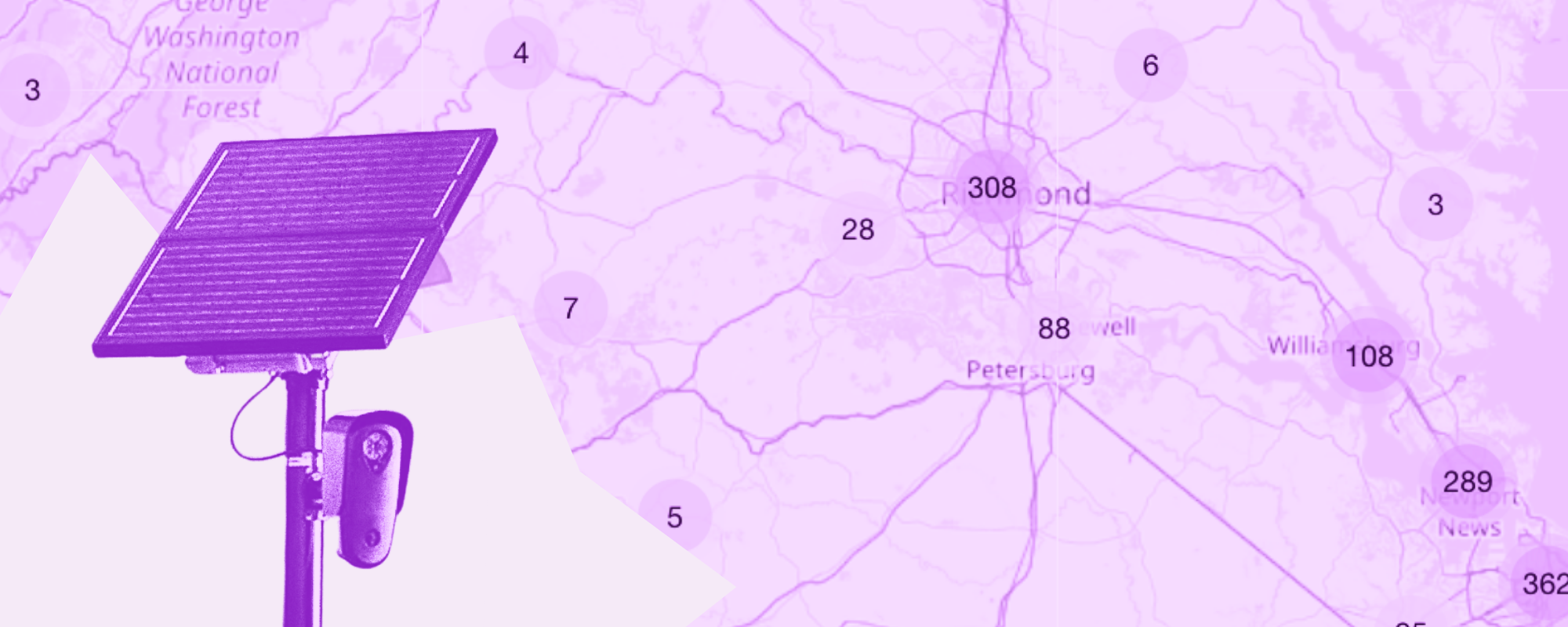
Privacy and freedom of movement are both core civil rights protected by the Constitution. But right now in Virginia, private companies and the government can watch where we go, listen to what we say, and record who we associate with using surveillance technology.
That’s because predatory companies like Flock Safety are quietly trying to build a nationwide mass surveillance system to track, log, and share our movements, all without a warrant.
Flock isn’t the only company trying to profit off spying on us, but no matter which company is operating cameras in your neighborhood, they all have the same problems. Mass surveillance means eliminating privacy and freedom as we know it. The companies building this infrastructure across the country are driven by their own profits, not the best interests of our communities.
We know immigrants and people of color are especially vulnerable to surveillance technology, with ICE and CBP repeatedly using Flock to target immigrants without warrants. But so are all Virginians: after all, these companies don’t just sell cameras. They are trying to build an inescapable surveillance network to track not just vehicles, but people.
Virginians don’t want that. This year, we defeated new bills that would have expanded surveillance technology, and we fought alongside grassroots communities around the Commonwealth to block Flock. Next year, we’ll be back in lawmakers’ offices to pass new legislation defending Virginians from surveillance.
Defeat Threats to Our Civil Rights
Politics right now is more extreme than ever, and federal attacks on our freedoms are putting Virginians’ civil rights and civil liberties at risk.
That’s why we worked so hard to put constitutional amendments on the ballot this year to defeat threats to our freedoms, no matter who’s in office. These amendments empower Virginians to:
- make our own, private decisions about our reproductive healthcare;
- marry who we love;
- vote after completing a sentence for a felony conviction.
We’ve seen Roe v. Wade overturned and the Voting Rights Act gutted. Each of the rights that the amendments protects is under attack: we know politicians won’t stop until abortion is banned, voting rights are wiped out, and same-sex marriage is eliminated.
But by enshrining our rights safely in Virginia’s constitution out of the reach of politicians, we knew we could defeat those attacks.
Alongside doctors and healthcare providers, families formed by same-sex marriages, and people who were incarcerated and people whose loved ones are still inside, we ran multiple campaigns to make sure voters knew the stakes of this election.
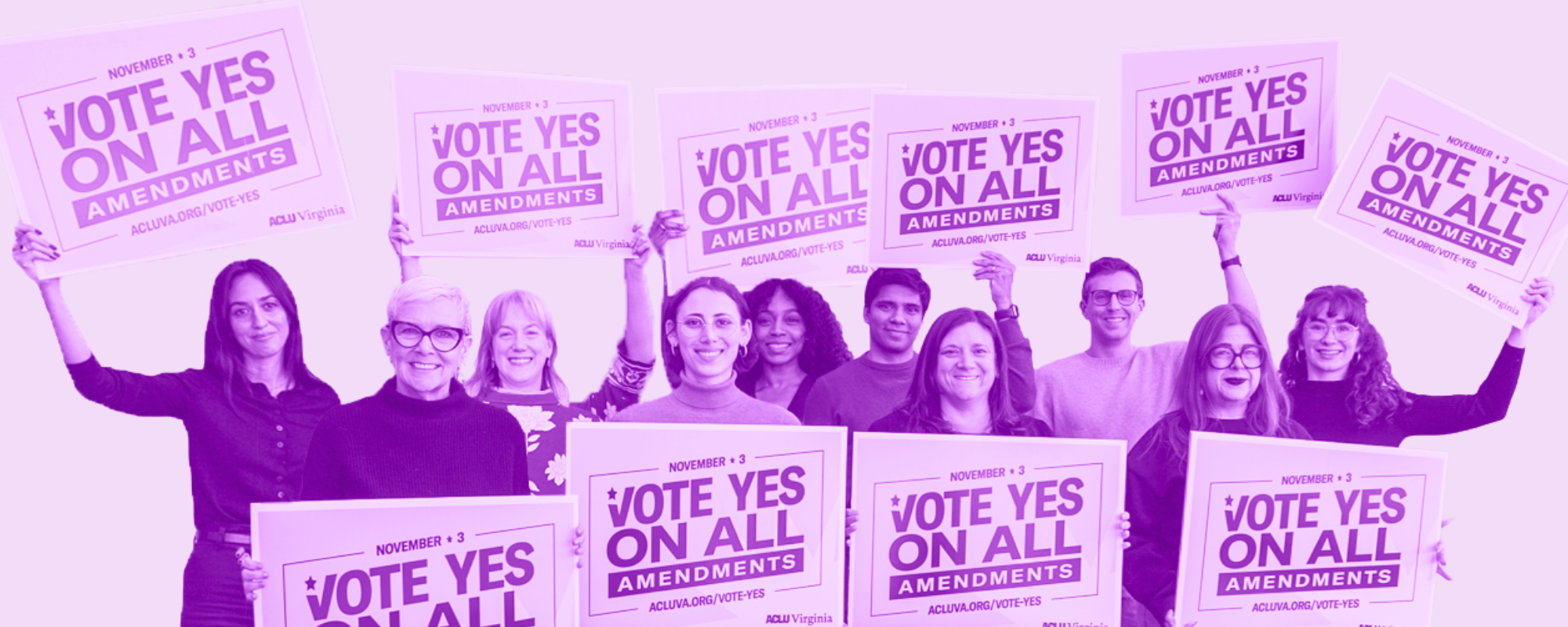
For each amendment, we helped shape three different coalitions of grassroots groups to make sure Virginians, not politicians, get the final say on our civil rights. And we ran our own, independent “Yes on All Three” campaign urging Virginians to vote for all three of the amendments – the only organization in the state to do polling on how the amendments interacted with each other and to run a paid campaign across all three.
Getting to victory takes all of us. Constitutional amendments are a high bar, and they take significant work to put on the ballot and pass. Years after we started this campaign, on November 3, Virginians finally went to the polls – and they voted to pass all three amendments to Virginia’s constitution, making voting rights, marriage equality, and reproductive freedom the law of the Commonwealth.
So what exactly do these amendments do? Amendment #1 pushed Virginia’s constitution to safeguard rights it had never addressed: our access to reproductive healthcare. Amendments #2 and #3 corrected historical wrongs that – until this November – were still enshrined in Virginia’s constitution.
Until this fall, Virginia’s constitution still had an outdated ban on same-sex marriage. Amendment #2 defeated that ban, ensuring that if federal protections for same-sex marriage go away, Virginians’ right to same-sex marriage won’t go away, too.
Amendment #3 also defeated elements of an outdated relic of Virginia’s past: Jim Crow. After the Civil War, Virginia put a provision into our constitution automatically taking voting rights away from anyone convicted of a felony, and then intentionally targeted Black and indigenous Virginians with felony convictions.
As recently as two years ago, only three states had more people who couldn’t vote due to a felony conviction than Virginia – and in Virginia, disenfranchised voters have been 3.5 times more likely to be Black.
Because the provision in Virginia’s constitution required people who lost their voting rights to individually petition the governor to get their voting rights back, in practice, Virginia’s governor – of any party – got to handpick their own voters.
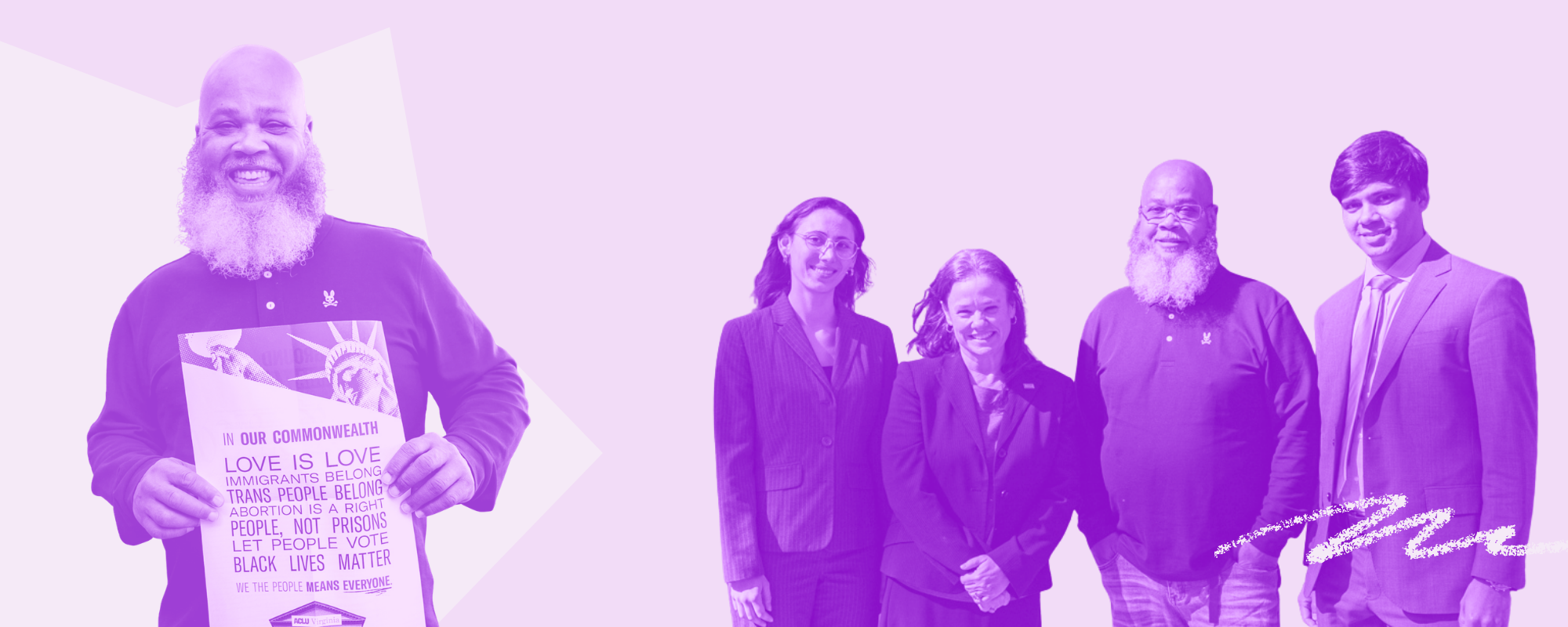
That’s why we filed King v. Youngkin, a lawsuit addressing Virginia’s felony disenfranchisement scheme, years before Virginians went to the polls to vote on Amendment #3.
It’s an enormous win that took Virginia from being the harshest state in the country in automatically and permanently taking away people’s voting rights to being a state that has virtually ended felony disenfranchisement.
Because of our win in King v. Youngkin, the Commonwealth will now only strip voting rights from people convicted of one of three felonies out of the more than 1,000 felonies that exist in Virginia. That means that of the quarter of a million Virginians who were ineligible to vote due to a felony conviction in 2024, only about 10 percent will remain disenfranchised.
Now, who gets to vote in Virginia won’t depend on the whim of a politician, and hundreds of thousands of Virginians will finally have a voice at the ballot box.
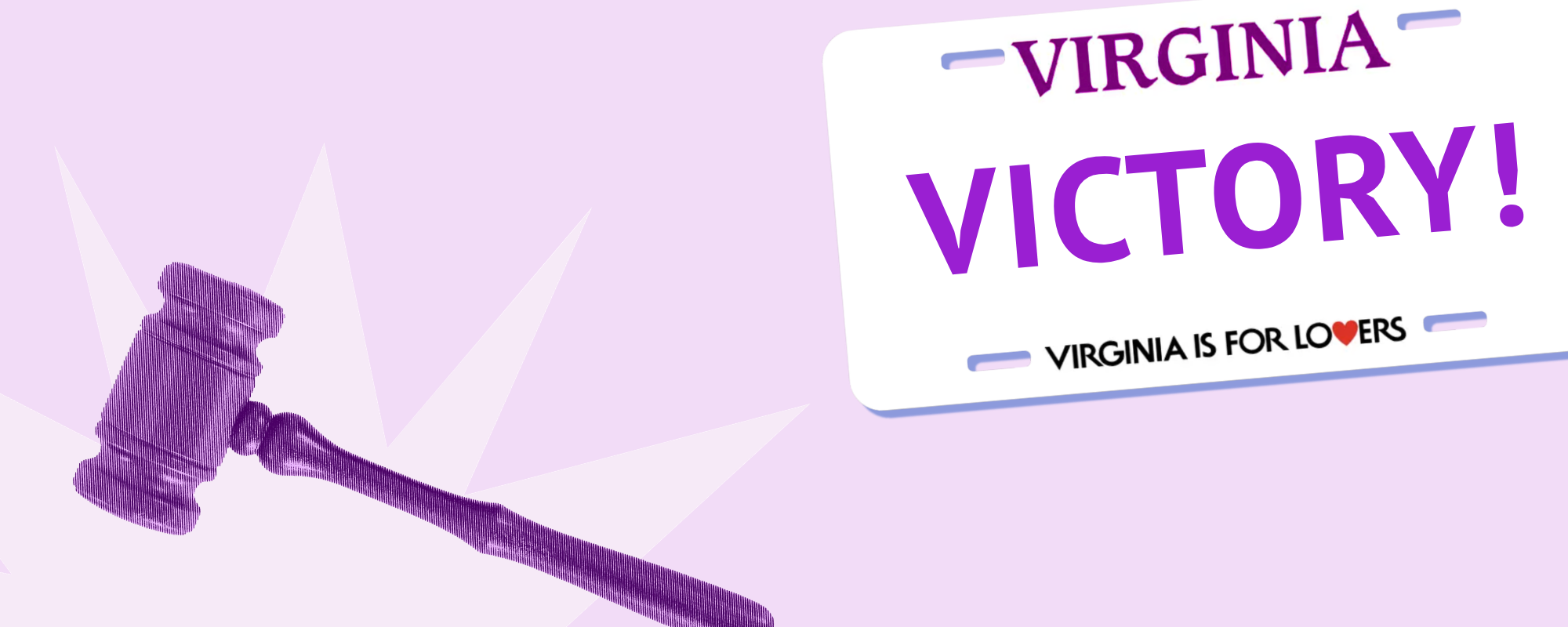
This year, we also worked to put power back in the hands of the people with two lawsuits designed to protect our First Amendment rights. In Whateley v. Lackey, we successfully argued that personalized license plates are private speech, not government speech.
And in Z.J.W. v. King George County School Board, we sued a school board that tried to pick and choose which student clubs are allowed based on whether they personally agreed with their message. Middle school students who formed a Gay Straight Alliance (GSA) followed all the rules, so the school board changed the rules to block the GSA – then let other clubs keep meeting.
But for LGBTQ+ students, GSAs are especially critical. Over half of LGBTQ+ students report experiencing discrimination in school, but schools with GSAs see fewer reports of harassment, higher GPAs and lower absenteeism across the entire student body.
It should not have taken a lawsuit for the King George County School Board to do the right thing, but we successfully reached a settlement to once again allow noncurricular organizations to form at King George Middle School – including a Gay Straight Alliance.
We’re committed to defeating censorship wherever we see it, and we’re especially committed to fighting for LGBTQ+ youth at a time when adults are attacking them to score political points.
Join our movement to put people over politics
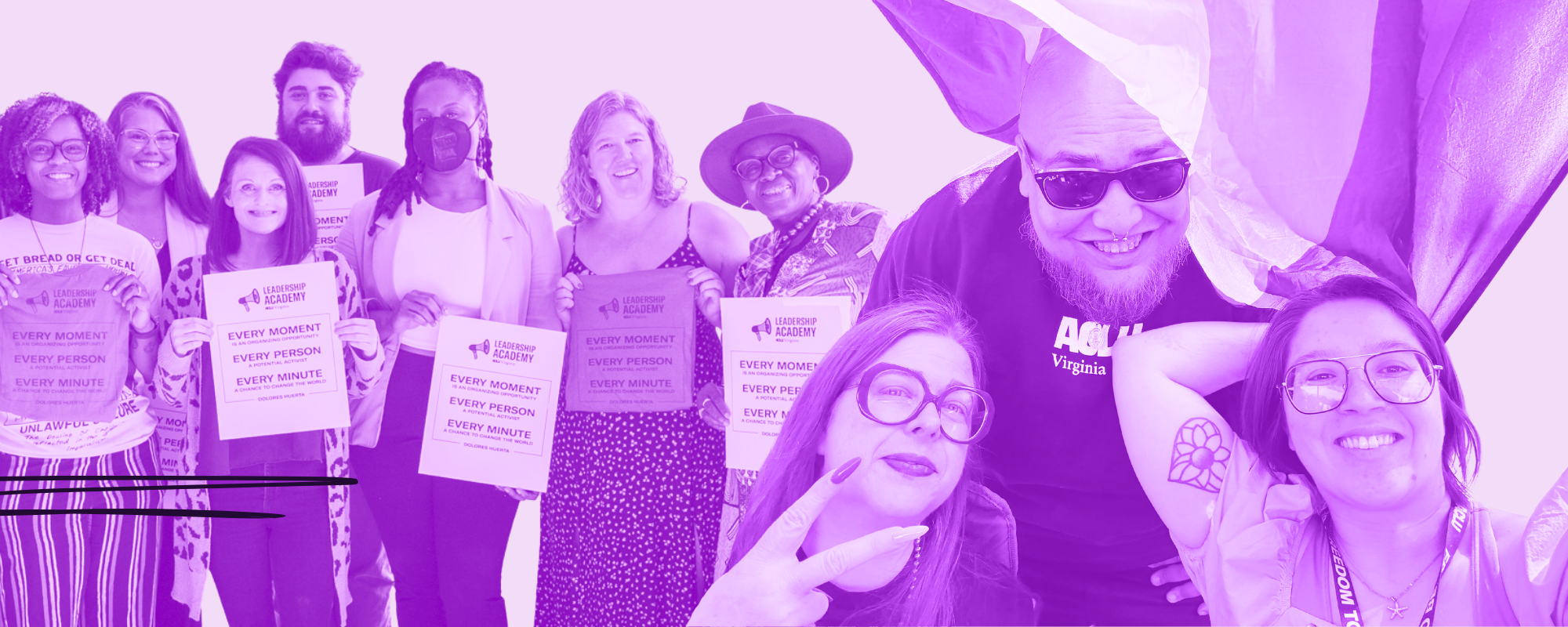
Our organizers are in communities from Hampton Roads to Roanoke, where Virginians are speaking out on issues from surveillance to reproductive justice through something we’re calling “CLAPBack Teams.”
CLAPBack stands for “Community-Led Action for the People,” and these teams offer a way to channel Virginians’ passion into collective power. Whether members are connecting with neighbors or helping organize local strategy sessions, being part of a CLAP Back Team means showing up for a Virginia that works for everyone.
In February, our organizers held ACLU of Virginia’s first-ever statewide lobby day to bring Virginians from all corners of the Commonwealth to the Capitol in Richmond to speak directly with lawmakers about what our communities need. Together, we’re debunking the myth that one person can’t make a difference, or that only experts can speak truth to power.
This year, we launched a new program aimed at doing just that: our inaugural Leadership Academy, which takes activists and turns them into organizers. More than 30 Virginians graduated from our nine-week program training people with an original curriculum to protect civil rights and civil liberties where they live.
The end result? Strategic, values-driven leaders in communities across the Commonwealth who are transforming this movement into something much bigger than lawsuits alone.
The unrelenting attacks on our rights can make it easy to feel powerless, but our organizers are debunking the myth that there’s nothing Virginians can do to keep each other safe or protect the freedoms we care about. Want to get involved? Join the real-world work we’re doing here.
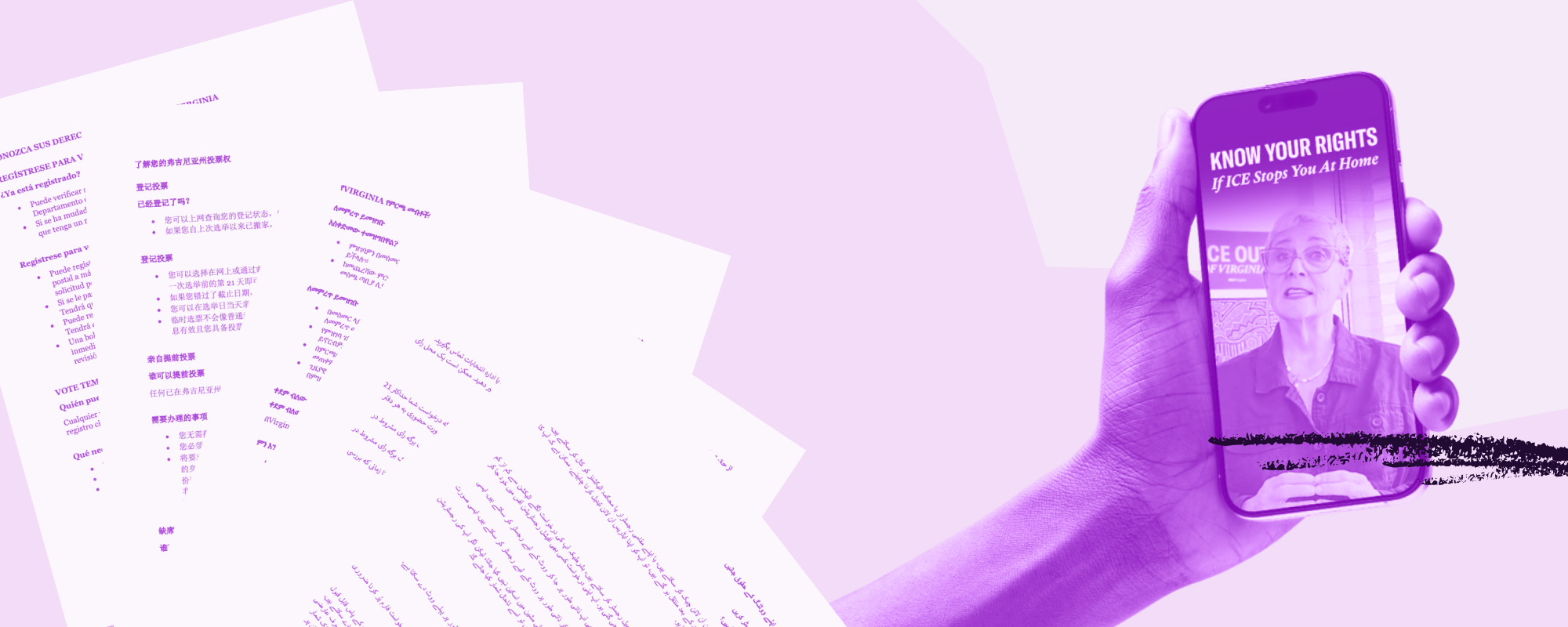
One of the most critical tools we can put in communities’ hands are Know Your Rights guides. This year, we launched a new library of guides in the top 11 languages Virginians speak for protesting, voting, countering anti-trans attacks, and interacting with the police and ICE.
We also collaborated with the ACLU of DC and ACLU of Maryland this year to release guides specific to the DMV region, so that everyone in an area widely recognized as one of the most diverse in the country knows their rights and can protect their neighbors.
Debunking fear and misinformation with Know Your Rights guides is only half the battle: we know that to truly counter attacks on our rights, we also have to debunk the stereotypes and dehumanization that often fuel it.
That’s why we also launched a new series this year called “We the People of Virginia” telling the stories of individual Virginians who are part of this work. Virginians who are reentering their communities after being incarcerated; Virginians who are supporting immigrants in detention; Virginians whose spouse is the same sex, or who have had abortions, or who are fighting for the right to dissent – they’re all there in this series.
Our goal with this project is to tell a different story about the diverse and committed people who call Virginia home. Civil rights and civil liberties can feel abstract, but by illustrating the way that these issues impact real people’s lives, we can debunk the idea that Virginians won’t fight to protect them. It’s up to us – not politicians or the powers that be – to ensure our rights are protected for the future in Virginia.
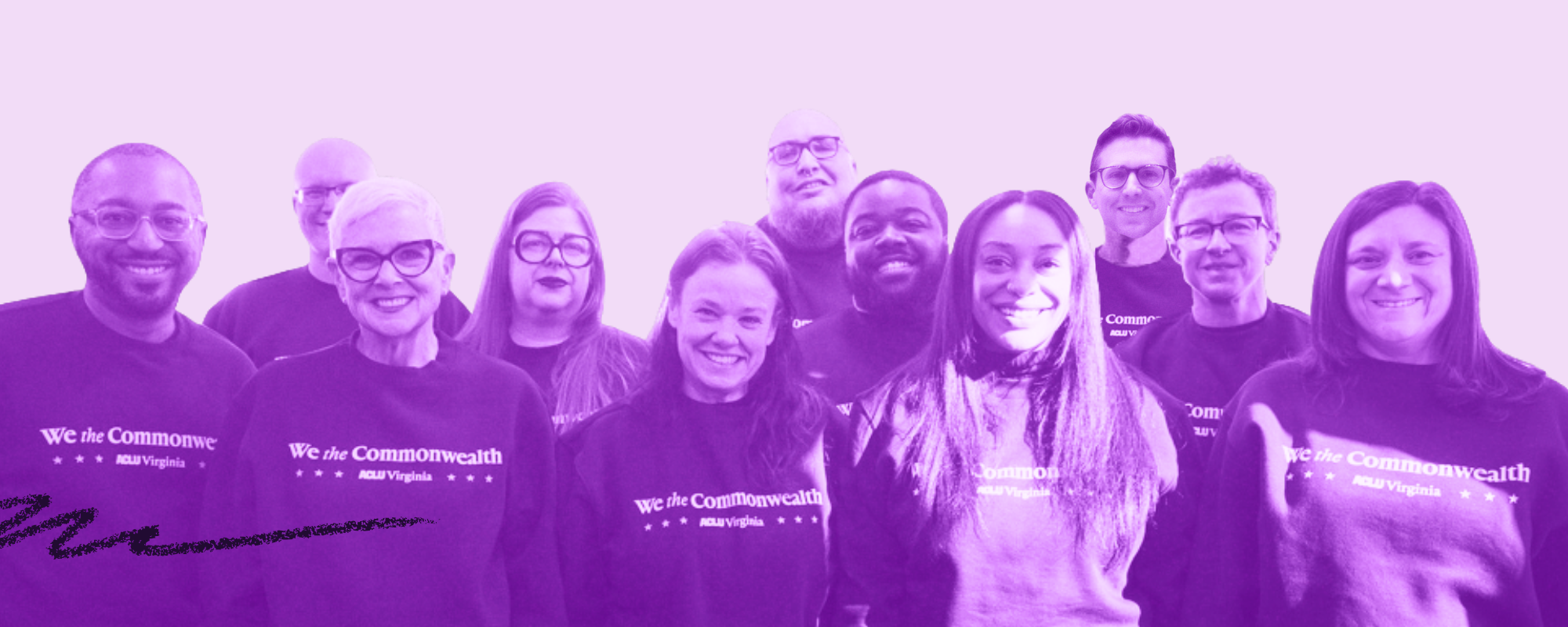
At the beginning of Trump’s second term, we said that to get to Virginians, he’d have to get past us – all of us. We were able to keep our promise this year thanks to your generous support.
Your commitment to fueling the fight for our freedoms is what makes our work possible. More than 40,000 people are active members of the ACLU of Virginia building this movement together. If they’re not already, invite your friends and family to become part of this powerful collective.
With you in our corner, we can defend Virginia from the Trump administration’s attacks and make the Commonwealth safe for all of us. We’re proud to partner with people like you who understand the stakes of this moment – and who are prepared to stay in it for the long haul.
Together, we are protecting the civil rights and civil liberties that keep all of us safe in Virginia.