
News & Commentary
Apr 19, 2016
Tell the Governor You’d Rather Not: Say No to Secrecy on Death
Note: The following was published in the Editorial section of the Roanoke Times on April 19, 2016.The current debate over the death penalty in Virginia reads like a dark, twisted version of the party game “Would You Rather?”When the House of Delegates and Senate convene Wednesday, they will consider amendments the governor has suggested to House Bill 815. That bill, as originally proposed by Del. Jackson Miller (R-Manassas) would have made Virginia one of only two states in the country to revert to using the electric chair automatically if for any reason it can’t carry out a scheduled execution by lethal injection. Right now, the electric chair can be used only if the prisoner requests it.Legislators have been told they have but two options regarding the future of capital punishment: let the Department of Corrections concoct secret execution drugs or stop killing monstrous criminals.To his credit, the Governor is against a return to the electric chair – a ghastly, antiquated tool of torture and death. The alternative he offered, secret acquisition and administration of secretly concocted drugs, however, is not the “reasonable” compromise he says it is and should be rejected.The problem is the drugs for lethal injection – which polls show the majority of Americans consider to be far more humane than the electric chair – are getting more and more difficult to acquire. Why? Because pharmaceutical companies that make them do not want them used in executions.Virginia was able to carry out its last execution in October only by buying drugs from Texas, which shielded the identity of its own source. The last of that batch in the state’s possession expired last week.The governor’s answer? Allow the state to contract with compounding pharmacies – which normally mix drugs to meet the needs of specific patients under prescription – to concoct new drugs in secret. Under the amendments offered to HB 815, neither the identity of the pharmacy nor specifics of the drugs themselves could be disclosed to the public via the Virginia Freedom of Information Act or even in a civil lawsuit.The ACLU of Virginia rejects this plan on its face, and not just because we support repeal of the death penalty. If the state is going to engage in the process of terminating someone’s life for any reason, no matter how reprehensible the crime that person has been convicted of committing, the public must have full knowledge and understanding of the process.Under the amendments to HB 815, neither the public, the press, nor the legislature – not even the person to be executed – would ever know what lethal drugs were used or who was responsible for making them.The process being urged on the legislature would put the Department of Corrections in the position of engaging in an unregulated, secret drug experiment with human beings as the subjects. Those implementing the death penalty would be authorized to inject new, unapproved, never-before-used, undisclosed drugs into the veins of a living person with the intent to kill.Experimentation with lethal drugs in executions in other states hasn’t gone so well. Take, for instance, the disturbing 2014 case of Joseph Wood in Arizona, who was injected 15 times with experimental drugs over two hours before he finally expired. As he lay “gasping and gulping,” according to the Guardian, executioners just kept pumping more and more chemicals into his arm.Make no mistake, the “would you rather?” choice being served up to the legislature today is not a choice between the gruesome electric chair and a more humane but secretive method of execution.There is nothing humane about experimenting on people with undisclosed drugs against their will.Moreover, there is no urgency to choose today between two disturbing outcomes. The seven people on death row aren’t going anywhere and the two closest to being executed have both received stays as they await possible hearings by the U.S. Supreme Court.The legislature should reject the governor’s amendments and embark on a long overdue discussion of whether Virginia should join the 18 states that have made the ultimate humane choice to discontinue the death penalty entirely.Everyone knows no one wins a game of “would you rather?”, let alone one in which the stakes are so high.Let’s hope the legislature tells the governor they’d rather not play at all.

Apr 18, 2016
Death in Jail: More Questions than Answers
The Office of the State Inspector General of Virginia’s recent report on Jamycheal Mitchell’s tragic death by neglect in the Hampton Roads Regional Jail has raised more questions than it has answered.The report, which details the well-publicized death of a mentally ill African-American man who died at the Hampton Roads Regional Jail while awaiting transfer to Eastern State Hospital, is notable for what it says about the dismal state of mental health services in Virginia. Of greater concern to the public, however, should be the many issues the report doesn’t address.Why are people with serious mental illnesses in jail in the first place? Why were law enforcement officials at the jail allowed to do a simple internal investigation and absolve themselves of wrongdoing? Who will be accountable for Mr. Mitchell’s death? Most importantly, how will we prevent this from happening again?The report highlights many points in the system where one clerical mistake or one negligent official can leave someone to languish and die in jail. Police failed to fully understand Mr. Mitchell’s mental health history before taking him into custody for the petty crime of stealing $5 worth of junk food. Local behavioral health officials failed to meet with Mr. Mitchell and asses his worsening condition. A clerk failed to deliver the court order to transfer him to a mental health facility. Hospital officials failed to act once the order was received. Naphcare, the private company hired by the jail, failed to provide adequate healthcare to Mr. Mitchell while he was in jail. And, Hampton RoadsRegional Jail officials failed to ensure the safety of someone in their custody.No justice system should be so tenuous and so full of pitfalls. It is a trap for many, but especially for those suffering from mental illness who now make up more than a quarter of the people being held in our jails.Jails are Virginia’s de facto solution to a lack of community mental health services. Nearly one in four inmates have a mental illness that requires treatment with drugs. Many of these inmates are clustered into overcrowded facilities with inadequately trained staff.The report on Mr. Mitchell’s death noted that state and local behavioral health officials consider inmates to be "in a safe environment" in these jails, and are a "lower admission priority for the Department of Behavioral Health." This is unacceptable. Jails are not therapeutic facilities. As a society, we have regressed to the 19th Century and a time of “asylums” if officials consider jail to be a safe environment for the mentally ill.Lawmakers have known about the problems within our jails for many years. The state Department of Behavioral Health and Developmental Services monitors the process by which mentally ill people are swept up into the criminal justice system. In 2014, the agency recommended changes to procedures, further oversight and accountability, additional training, and a complete overhaul of how people with serious mental illness are treated within the criminal justice system.Neither the General Assembly nor present nor past administrations have made these concerns and recommendations a top priority, despite reports calling for such urgency.This past session, the General Assembly did pass House Bill 685 that seeks to prevent orders from being “lost” as was the case with Mr. Mitchell. The new law requires General District Court Clerks to transmit orders for treatment to a mental health facility by the end of the next business day and the receiving facility must acknowledge receipt of the order by the end of the following business day.This is an inadequate first step in addressing the many problems facing our system. Even with this new law, if a judge issues an order near the weekend, it could be another five days before it is acted upon. The new law has no enforcement mechanism, as it absolves any individual official of liability except in cases of gross negligence or willful misconduct. It is a rule without a remedy for the people and families affected by a broken system.Our thoughts are with Mr. Mitchell’s family. It should not take a “critical incident,” as the report calls Mr. Mitchell’s death, to spur the state into action. We must put pressure on public officials to continue to investigate Mr. Mitchell’s death until all questions are answered, and those responsible are held accountable.The ACLU of Virginia and many other community advocates have continuously called upon public officials to reform our criminal justice system. People with serious mental illnesses should be taken to treatment centers, not to jail.

Feb 26, 2016
Virginia Wisely Rejects Secret Police
Imagine a future in which the government keeps secret the identity of every member of state and local law enforcement.It’s a frightening, Orwellian scenario that some legislators in Virginia thought was a good idea. Fortunately, a state House of Delegates subcommittee blocked the bill on Thursday, which would have allowed even more government information to be hidden away under the state’s F-rated open government laws.Senate Bill 552, sponsored by Sen. John A. Cosgrove Jr. (R-Chesapeake), would have exempted from public disclosure the names of every full- or part-time law enforcement officer and fire marshal in Virginia, including Alcohol Beverage Control officers, lottery investigators, local dogcatchers, state fish and game wardens and marine police, deputy sheriffs, and rookie traffic cops as well as the highest ranking law enforcement officers in the commonwealth.Proponents of the bill said it was necessary to protect police officers and their families from bad guys who might seek to harm them. They were not, however, able to provide any evidence proving their point. That is because shielding individual officers from evil-doers is not why the bill was introduced.The bill came about in response to an effort last year by the Virginian-Pilot newspaper in Virginia Beach to obtain names and training records of active duty law enforcement as part of a “Spotlight”-type investigation, which broke the pedophilia scandal in the Archdiocese of Boston and inspired an Oscar-nominated film. The Pilot wanted to find out whether officers dismissed for misconduct in one jurisdiction were being passed along to other departments to be put back on the streets with a badge and gun.Such an investigation could well draw attention to an ugly truth about law enforcement in Virginia. The process by which police officers can be decertified, preventing them from moving from locality to locality and repeating bad behavior, is shamefully weak and presents a danger to the public.The Virginia Fraternal Order of Police and the Virginia Association of Chiefs of Police fought the release of officer names and training records to the Virginian-Pilot in court. They lost, and so then they tried to change the law to make the records secret while misleading the public about their motivations and the bill’s real purpose.Let’s be clear: SB 552 was not about protecting individual officers or their families from harm. The sheer breadth of personnel covered by the act made that obvious. In addition, departments already have discretion to withhold an officer’s personal information from the public where there is an actual threat of harm. This bill was about making it difficult, if not impossible, for the press or the public to examine the hiring practices of Virginia law enforcement agencies or to develop a case for changes in our weak decertification law.SB 552 was also not in the interests of state and local law enforcement agencies if they are actually serious about their commitment to greater transparency and accountability that are essential to earn the trust of the people they are supposed to serve.SB 552 certainly would not have served the public interest. The public pays the salaries of every police officer and has a right to demand more, not less, transparency and accountability as conditions of earning its trust and support. The fact is the public actually would have been less safe if this measure had passed because it would have helped hide the type of problem the Virginian-Pilot was seeking to uncover. The result would have been that officers with multiple disciplinary violations, even for serious misconduct involving use of force, would continue to be enabled to practice policing in Virginia with the public being none the wiser.For that very reason, SB 552 also was an attack on the heart of the First Amendment. To the founding generation, the liberties of speech and press were intimately connected with popular sovereignty and the right of the people to see, to examine, and to be informed about the workings of their government. Police officers are the government agents everyday people interact with the most and therefore deserve — and should expect — public scrutiny.Proponents tried to minimize the bill’s impact by saying it wouldn’t really have prohibited release of officers’ names. They said the bill simply specified that names are part of personnel records and, as such, would be exempt from mandatory disclosure.Guess what? Government agencies in Virginia — and law enforcement ones in particular — rarely release public documents if not required to do so. The culture of secrecy that permeates law enforcement agencies in Virginia all but ensures that any record that can be withheld from the public will be withheld.Virginia’s shoddy Freedom of Information Act lists 130 types of records that are exempt from mandatory disclosure to the public. Almost without fail, anytime a member of the public asks for a document that might fall under an exemption, the government chooses to withhold it. Beyond that, agencies often just flout the toothless law, refusing to disclose documents that actually are required to be released.If SB 552 had passed, the secrecy of police officers’ identities would have been a given not a possibility. For now, at least, this dystopic vision can remain just a fantasy for law enforcement.
Jan 21, 2016
Get a Warrant, Get Consent or Get Out
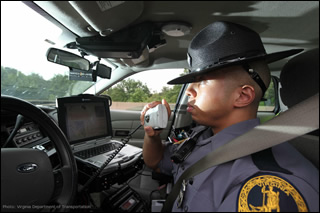
You may not realize this, but the government and corporations regularly access our personal, private information – and even that of our children – without our knowledge or consent, and on a daily basis. They use it for profit. They use it to track our location. That’s right—it’s hard to believe, but it’s true.These regular incursions into our privacy are made easier by the fact that our laws have failed to keep up with new technologies. As technology has advanced, our digital privacy laws remain stuck in the digital Dark Ages. This means that emails, text messages, location information and all of our digital data have been open to warrantless police surveillance.Virginia’s Sen. Chap Petersen (D-Fairfax) and Del. Mark Dudenhefer (R-Stafford), along with chief House co-patron Del. Rich Anderson (R-Woodbridge), have taken a critical step forward to ensure Virginians are no longer vulnerable to such government overreach. The Virginia Electronic Privacy Act (ECPA) would require law enforcement to obtain a warrant before accessing electronic information about our identities, where we go, who we know and what we do. This bill will provide reasonable privacy protections for our emails and other electronic information where federal law has failed to do so.Virginia residents should know that the government is working to protect their privacy, not violate it, and the majority of Americans across the country feel the same way. A 2014 study from the Pew Research Center found that that 75 percent of adults believe that their emails, text messages and location information are sensitive, and that 80 percent of adults feel Americans are rightly concerned about the government monitoring of Internet communications. Another recent poll found 90 percent of Americans want the next president of the United States to prioritize “protecting privacy so [Americans] have more control over our personal information.”Such widespread, nationwide support reinforces what we already know: Privacy issues transcend party lines. Republicans and Democrats, conservatives and progressives alike all want to be in control of their own privacy.Senator Petersen, Delegate Dudenhefer and Delegate Anderson join a diverse bipartisan coalition of elected officials and citizens from sixteen states and the District of Columbia who have come together to tell the nation they care about digital privacy and are willing to fight for it. The message from these states is clear: Where Congress is unwilling or unable to act to protect Americans’ privacy, or takes actions that are insufficient, the states are more than willing to step up and fill the void.Other states such as California, Colorado, Maine, Texas and Utah have already passed laws similar to Virginia’s ECPA. It doesn’t matter if you’re a blue or red state—people from all political stripes believe that using stealthy, secret or concealed technologies to access our data without our knowledge or consent is simply not an acceptable practice. Without a warrant, or our express permission, government simply shouldn’t be searching through our private information.The guiding principle for privacy in the United States in 2016 is the same as it was in 1776: “Get a warrant, get permission, or get out.”

Sep 30, 2015
Executions at any Cost
Virginia is nearing its first execution in three years. On Oct. 1, the Commonwealth is scheduled to execute Alfredo Prieto. If the execution of Mr. Prieto goes ahead as scheduled, the Commonwealth will show that the machinery of death trumps government transparency, accountability, and the U.S. Constitution.

Aug 12, 2015
Our Chance to Bring Constitutional Policing to Fairfax County
This month is bookended by reminders of police abuse. Last Sunday marked one year since a police officer shot and killed Michael Brown in Ferguson, Missouri and August 29 will mark the two-year anniversary of a police shooting that occurred much closer to home – the shooting of John Geer by a Fairfax County police officer. In both cases, the men were unarmed. And, in both cases law enforcement and elected officials responded with an official wall of silence.In our society, we too often wait to consider and make needed reforms until after a horrible event triggers a public outcry. Ferguson and Fairfax County are sad examples of this reform model. As we wrote earlier this week, the police abuses in Ferguson triggered some positive reforms, including new restrictions placed on the transfer of military equipment from the federal government to state and local law enforcement. These were reforms for which we’d advocated previously, but which failed to gain traction until Ferguson made them impossible to ignore. Fairfax County is also a place where advocates have long sought police reforms. But, it took the inaction by the Fairfax County Policy Department (FCPD) in the wake of Mr. Greer’s death and federal concerns about how the investigation was handled for the Fairfax County Board of Supervisors to establish a commission to review the FCPD’s policies and practices and recommend changes to ensure a culture of public trust between the FCPD and the community. The high bar set to trigger reform opportunities makes it even more important that we push the commission to recommend real reforms now!The establishment of the police review commission in Fairfax, referred to officially as the Ad Hoc Police Practices Review Commission, is an important step in restoring civilian authority and oversight over policing in the County, a step that is also essential to restoring public trust in the FCPD. The commission is made up of a diverse group of stakeholders, including community advocates, law enforcement, and academics and will offer its recommendations to the Fairfax County Board of Supervisors this fall. The substance of these recommendations is still undecided. It’s up to us to ensure that they are rooted in the concepts and values of accountability, transparency, constitutional policing and respect for the sanctity of human life – otherwise we risk recommendations that merely rubber stamp the policies and practices that led us here in the first place.We can all make our voice heard in this process. You can check the Police Commission meeting schedule or the committee and subcommittee webpage to see when and where the commission and its subcommittees will meet and whether the agenda will include a public comment period where you can add your voice. The community’s input matters – your voice can make a difference.Not sure what to say? Here is what we’re asking the commission to recommend. Our recommendations are based on the belief that law enforcement officers are guardians of the Constitution.These recommendations include:

Stay Informed
Sign up to be the first to hear about how to take action.
By completing this form, I agree to receive occasional emails per the terms of the ACLU’s privacy statement.
By completing this form, I agree to receive occasional emails per the terms of the ACLU’s privacy statement.