For as long as Eliza Munshi can remember, she has always been sparkly. Before she could talk or walk, she would crawl around the house with her mom’s sparkliest shoes in her hands. She turned her mother’s tank tops into dresses, wore clip-on earrings, and went to pre-school in little princess heels.

Young Eliza dresses up as the sparkliest princess for Halloween.
Photo courtesy of Eliza
—She was such a cool kid and so creative. We didn’t know that she was trans until she told us – and that wasn’t for us to decide. It really was just following her lead and accepting who she was.
Ali (Eliza's mom)
Eliza was a happy kid – dearly loved and sheltered by her parents with the freedom to explore and express herself.
Eliza: “I have never had a moment feeling liberating just because I've never had a moment that I felt unliberated.”

Eliza dresses up stylishly in orange, with her scarf elegantly draped over her head, to go pick strawberries with her family.
Photo courtesy of Eliza
But from her parents’ perspective, things were different.
Ali: “The acceptance part, super easy. We didn’t struggle at all to accept her for who she is. But helping her navigate the world – with all its rules and barriers – it definitely was harder.”
—There were times that I did care – not because of you – but because of how the world would interact with you and the pain it can cause you.
Shyam (Eliza's dad)
Shyam: “I remember when you were really little, you would look very longingly at the pink aisles, but you wouldn’t go there until you looked at me a couple of times and made sure it was okay for you to go there. At first, I didn’t want you to. There was always a piece of me that was like: “Oh, I didn’t want to walk down the Barbie’s aisle with you.” I wasn’t sure that I would be comfortable with that. But it was an evolution that came with education and with understanding how happy you were.”
By the time Eliza was in high school, she had been out as a transgender girl for years. So when her friend Betty suggested that they play a sport together, she was nervous about trying out for the team – not whether she would be accepted as herself.
Eliza: “I love my team. Every meet, I was just sitting with my teammates, seeing all of them do their events, and them watching me do mine. ...It was great because in the beginning I was so nervous about track, about trying out a new thing, about being around these people more. But, on the last day, I was just feeling so comfortable. Just having that community and having really good friends there, that was really special. And on my last meet, I beat my personal record three times in a row.”

Memorabilia from high school, including from Eliza's track and field team, sit on a prominent spot on her bookcase.
But despite her community’s acceptance, when President Trump demanded that transgender girls like Eliza be banned from competing on girls’ and women’s sports teams, and the Virginia High School League followed suit, Eliza was forced to compete on the boys' team.
So – decked out with pink hair and pink makeup – Eliza and her parents decided that’s exactly what she would do.
Eliza: “I did it to prove a point. I knew I could do it. I knew it wouldn’t phase me. My gender itself and that label has been the least important part of my transition: I want to look how I want to look. I want to dress how I want to dress. If you don’t like that, then that’s not my business. So honestly, being on the boys’ team didn’t give me dysphoria or anything. I knew that I was strong enough to handle it, so let’s do it.”
Ali: “And I think the point she was trying to make is that it’s so silly that a girl is participating with the boys. Fairness is really important, but trans girls are girls.”
—Being trans is not a decision someone makes to have an advantage in sports.
Ali
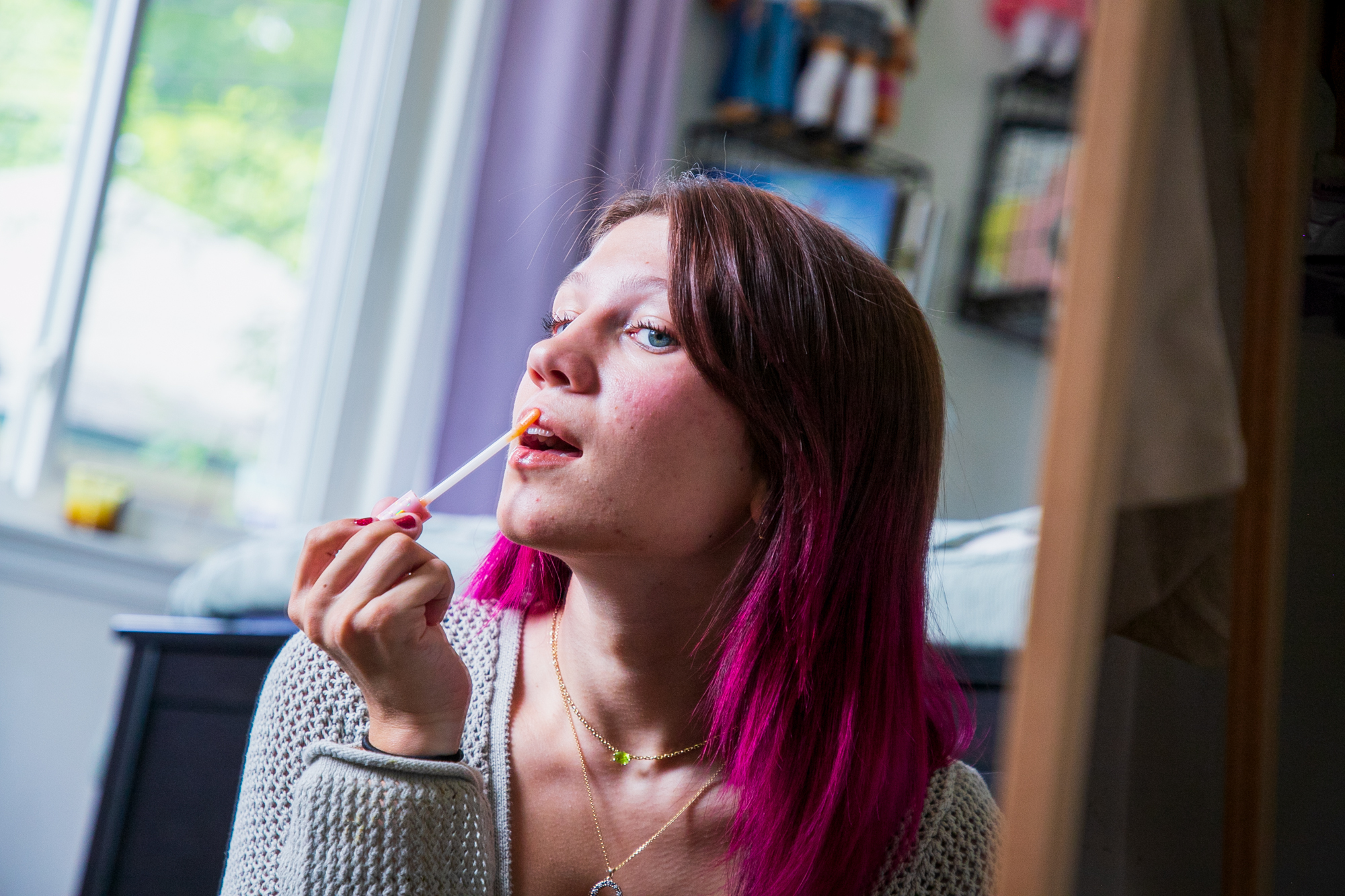
Eliza puts on lip gloss as a part of her daily routine.
Photo: Phuong Tran
When her friends and allies found out that Eliza chose to compete on the boys' team to prove a point against President Trump's and Virginia High School League's banning trans girls from playing sports, the whole community rallied around her.
Eliza: “They were all so supportive. My friends that weren’t in track came to a couple of meets. My friends that were in track all had my back constantly. I had teachers at school that I didn’t even have seeing me in the hallway and mentioning that they are on my side. It was just a very supportive environment.”
Eliza competed on the boys’ track and field team her senior year, where her transgender identity was on prominent display. But when she walked across the stage at her graduation, all her family saw was Eliza.
—I didn’t see a single bad reaction in the real world.
Eliza
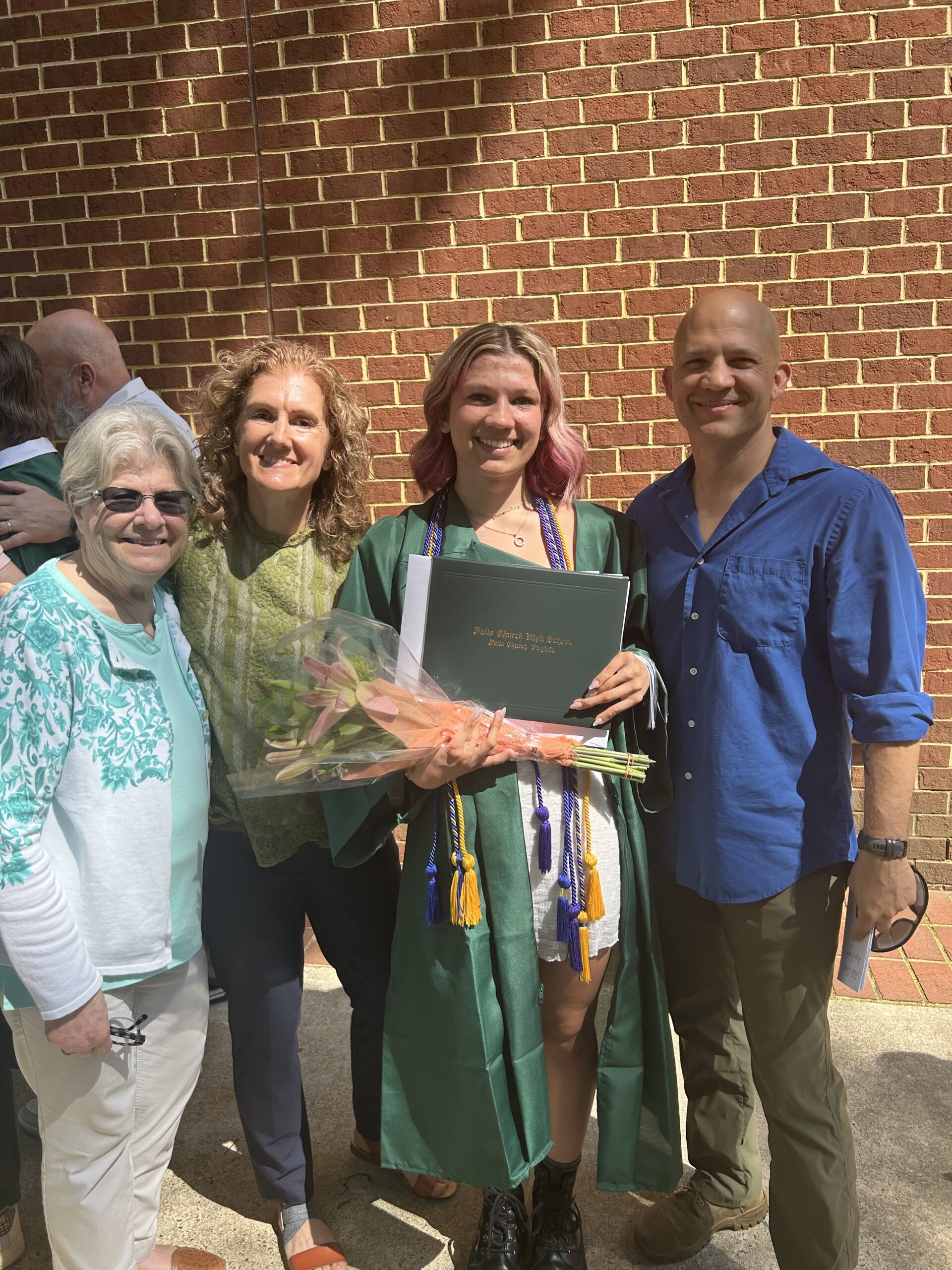
From left to right: Eliza's Nana, her mom Ali , Eliza, and her dad Shyam.
Photo courtesy of Eliza
Shyam: “At her graduation, zero percent of my brain was thinking about any trans issue whatsoever.”
Ali: “I don’t think I thought at all about her being trans. I thought about her boots, how she stood out with her Dr. Martens boots, her signature pink hair, the way that she walked with such confidence, and of course her Nana, her first major supporter, fl[ying] from Ohio to be at her graduation.”
—This was my daughter — growing up, stepping into the world with confidence, intelligence, and empathy, and all the things that make parents proud.
Shyam
Growing up in a military family, Eliza moved around a lot. Her mom and dad made a point to take Eliza to Pride every year, from Alabama to Florida to Virginia, to remind her why Pride matters.
Ali: “Visibility is so important. I’ve had trans young adults who say: ‘I’ve never met an affirming parent until you.’ That’s heartbreaking. Going to Pride feels so good to look around and see all of these are my people, all of these accept my daughter for who she is. That’s what Pride does: most people are supportive. Most people celebrate who you are. It’s not okay to just stop at supporting Eliza. We have to keep fighting for all – not just trans kids, but any groups that are marginalized and their rights are threatened.”
Shyam: “If you’re in [the LGBTQ+] community, you feel like you’re being attacked all the time. So, for me, part of Pride is showing support as an ally. I want to stand there and say: ‘Sure, there are these 10 people who are yelling at you, but there are a hundred over here behind you – that are quietly supporting you, or even loudly supporting you.’”
—It’s not okay to just stop at supporting Eliza. We have to keep fighting for all – not just trans kids, but any groups that are marginalized and their rights are threatened.
Ali
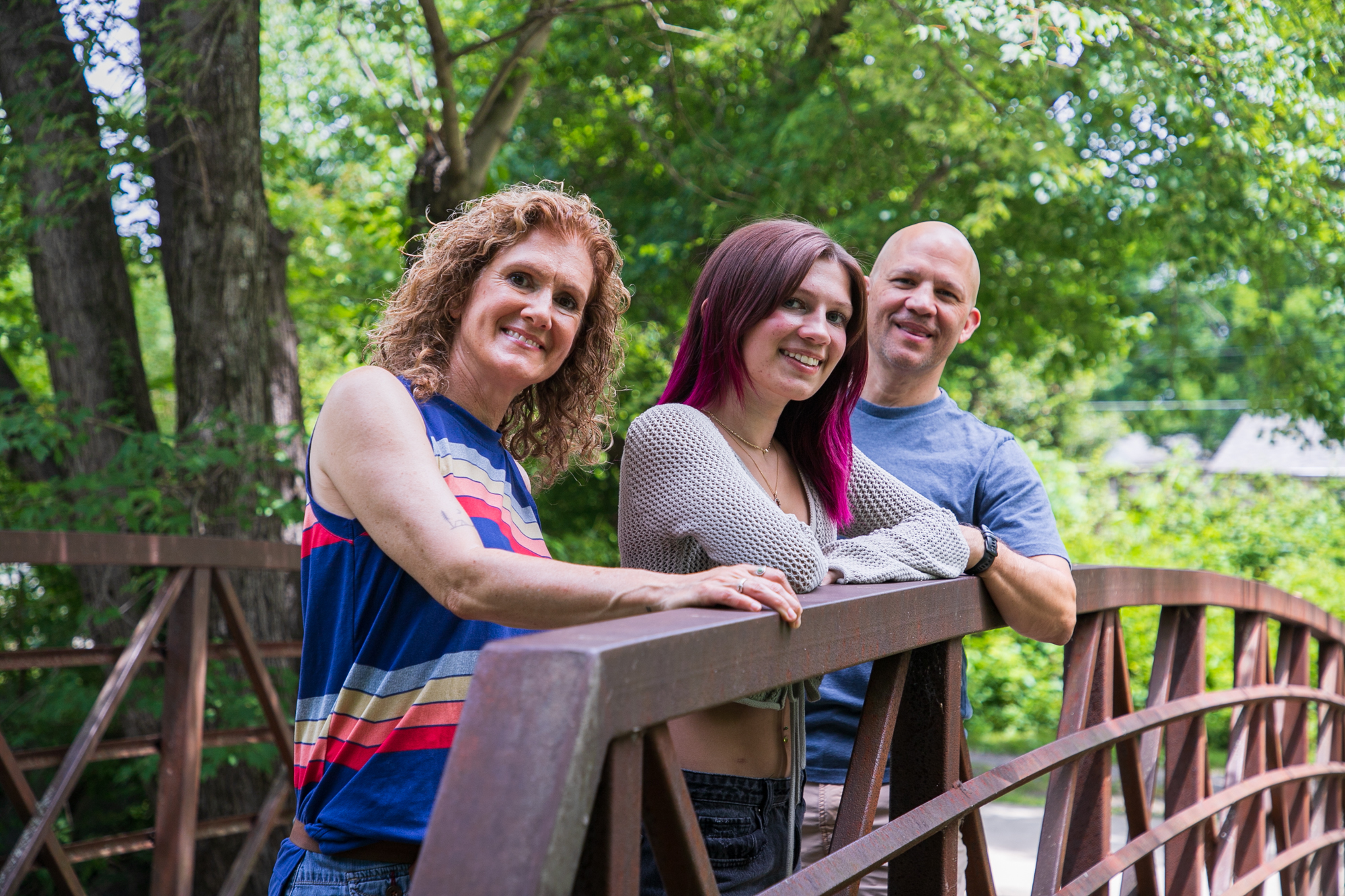
Eliza and her parents agree to share their family's story to help people understand what it means to be trans, even though there's so much more to Eliza.
Photo: Phuong Tran
As for Eliza, now 19, she has a whole world in front of her to explore. She's going back to school and doing what feels right to her.
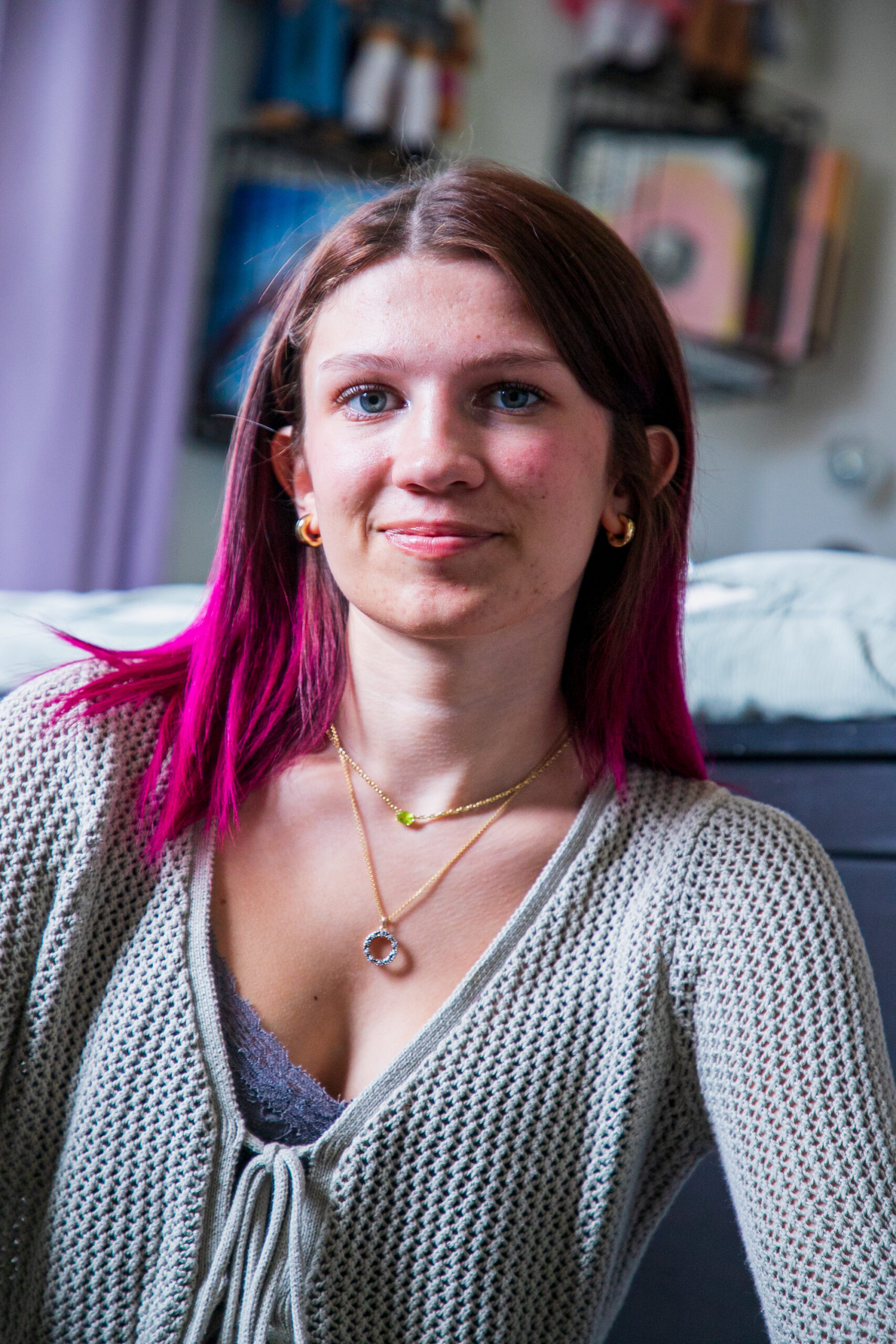
Eliza smiles confidently.
Photo: Phuong Tran
Eliza: “I would always say this to anyone at any age: Do what feels right. And that’s what my mom said to me. If you want to start wearing feminine clothes even though you’re like 20 and having been a boy for 20 years – do what feels right to you. And if it doesn’t feel right later, stop doing it.
“No one is asking you to have it all figured out by tonight. You have so much time to do whatever feels right – and if it leads you to a full transition, that’s great. If it doesn’t, that’s also great. Just do what makes you happy, and don’t do what doesn’t make you happy.”
—Eliza has a bazillion defining characteristics, one of the least interesting is that she is trans. There’s so much more, to everybody.
Shyam